
Iran launched an attack, causing the price of gold to rise by nearly $30 at one point, warning of high volatility and peaking
Daocheng Technology Financial News - Monday (April 15) at the beginning of the Asian market,Gold priceIt jumped $13 at $2357.71 an ounce before extending gains to a high of $2372.45 an ounce as Iran fired more than 300 drones and missiles at Israel late Saturday night, boosting tensionssafe haven assetThe demand.
However, since most of the missiles and drones were intercepted, there were no reports of casualties. In addition, although Israel's wartime cabinet was determined to respond to the attack, the timing and manner of the response were undetermined. Although some members proposed a counterattack, it was firmly opposed by the defense minister and others. Israel informed the United States that it did not intend to significantly escalate the conflict. Biden told Israel that he would not participate in the offensive against Iran. Risk aversion has not continued to heat up, and the current gold price has fallen back to $2354.19 per ounce. If the situation in the Middle East does not deteriorate further, the gold price faces the risk of a shock peak in the short term.
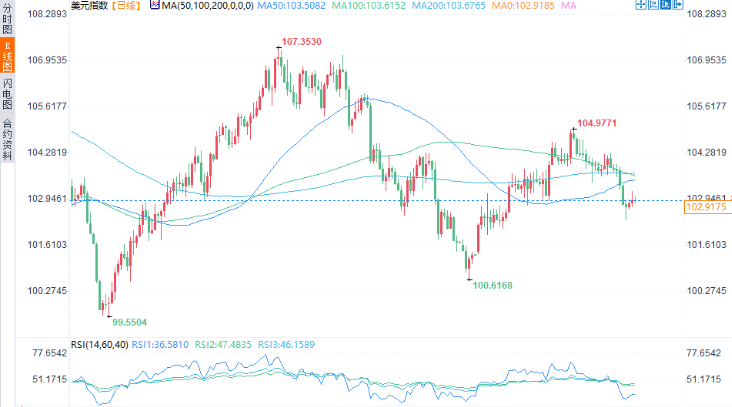
(Gold price hourly chart)
Iran fires drones and missiles at Israel, first direct attack on Israeli territory
Iran fired swarms of explosive drones and missiles at Israel on Saturday night in its first-ever direct attack on Israeli territory, raising the prospect of a significant escalation as the US pledged its firm support for Israel.
Sirens sounded in Israel, and reporters said they heard in the distance what local media said was a low-pitched explosion from the drone being intercepted in the air.
Israeli military spokesperson Major General Daniel Hagari said Iran fired dozens of surface-to-surface missiles at Israel, most of which were intercepted outside Israel, including more than 10 cruise missiles.
Hagari said Iran had launched more than 200 drones and missiles so far, causing minor damage to an Israeli military installation.
The Security Council held an emergency meeting on the conflict between Iran and Israel, and Guterres called on both sides to cease hostilities
UN Secretary-General António Guterres condemned the Iranian attack, saying he was "deeply alarmed by the real danger of a destructive escalation across the region."
According to the schedule released late Saturday night, the United Nations Security Council is scheduled to meet at 4 a.m. Monday, Beijing time, after Israel asked the Security Council to condemn the Iranian attack and designate Iran's Revolutionary Guard Corps as a terrorist organization.
On April 14 local time, the UN Security Council held an emergency meeting at the request of Israel to discuss Iran's military action against Israel. UN Secretary-General António Guterres participated in the emergency meeting and gave a briefing. Citing the communication between Israel and Iran, Guterres reiterated his call for an immediate cessation of hostilities between Israel and Iran. Guterres reiterated that attacks on a country's territory are not in accordance with the principles of the UN Charter, and attacks on diplomatic premises also violate international law.
Iran's Supreme National Security Council issues statement on Iran's response to Israeli military action
On the evening of the 14th local time, Iran's Supreme National Security Council issued a statement on Iran's military operation against Israel. The statement said that the reason why Iran's Islamic Revolutionary Guard launched large-scale missile and drone attacks on Israel was that Israel had crossed Iran's "red line" and violated Article 2 of the UN Charter. The Iranian armed forces carried out military operations under Article 51 of the UN Charter. Iran took necessary and minimum punitive measures against the aggressor Israel to ensure Iran's national interests and national security. In this operation, Iran only targeted the Israeli air force, intelligence agencies and military bases, avoiding attacks on Israel's economy and infrastructure. At present, Iran has no plans to launch military operations. If Israel wants to continue its criminal actions against Iran by any means and at any level, it will face at least a tenfold response from Iran.
The Israeli military has announced the damage caused by Iranian missiles to its territory
On the evening of the 14th local time, the Israeli military released video and image content showing that the Nevatim Airbase in southern Israel was attacked by Iranian ballistic missiles between the evening of the 13th and the early morning of the same day, causing some damage. The Israeli army said that the air base is still in normal use, and the damage caused by the missiles fired by Iran to the area near the taxiway is "minor." Another ballistic missile hit a road in the Hermon mountain area of northern Israel, causing no serious damage.
Should Israel immediately launch a retaliatory attack on Iran? Israel is divided
According to the Times of Israel, far-right members of Netanyahu's government have strongly called on Israel to respond to Iranian attacks on Israel with a show of force, while other moderate members, including wartime cabinet minister Benny Gantz, have urged a balanced approach to avoid a spiral of escalation.
While some members of the security cabinet have strongly called for retaliation, the final decision to respond will be made by the three members of the wartime cabinet (Benny Gantz, Prime Minister Benjamin Netanyahu, Defense Minister Ehud Gallant). Gantz's announcement Sunday afternoon that Israel must strengthen "strategic alliances and regional cooperation" to enable it to withstand an Iranian attack may signal how Israel will respond.
Israeli President: Iran's attack on Israel is a "declaration of war" but Israel will exercise restraint
According to Sky News, Israeli President Herzog said Iran's attack on Israel was a "declaration of war". "We were attacked last night from four corners of the Middle East, with Iran and its proxies shooting at us, firing missiles, ballistic missiles, drones and cruise missiles," he said. "It's like a real war. I mean, it's a declaration of war." "World leaders need to make it clear to the Iranian regime that its actions are unacceptable." He added that Israel would exercise restraint.
US official: Israel says it is not seeking to escalate the situation over Iranian attacks
Israel says it does not seek to escalate the situation over the Iranian attack. Iran did not warn us in advance of Saturday night's attack, in which Iran fired 100 ballistic missiles, U.S. officials said. The United States has been in contact with Iran through Swiss channels.
Expert: Iran needs to express its strategic resolve to Israel, but the possibility of escalation is limited
Wang Jin, director of the Israel Studies Center at Northwestern University, said that the reason why Iran chose to carry out military retaliation against Israel at this moment is actually a special background. The military attack from Iran on Sunday, the first day of the week in Israel, is actually a manifestation of Iran's strategic determination to put more military pressure on Israel. However, Iran has announced in a high-profile manner after this round of military strikes that the military operation has stopped. In fact, judging from the current domestic casualties in Israel, Israel intercepts the vast majority of missile and drone attacks from Iran and other directions, but in fact does not cause too many casualties to Israel. In this context, the possibility of future escalation between Israel and Iran is relatively limited.
Outlook
Gold rose above $2,400 a troy ounce on Friday to a record high of $2,431 an ounce, its fourth straight week of gains, as rising tensions in the Middle East prompted investors to seek refuge in safe-haven assets, but fell more than $100 in late trading in New York to close at $2344.61 an ounce, highlighting strong profit-taking demand.
This trading day requires the Middle East to pay attention to the monthly rate of US retail sales, which is known as "terrorist data". The market is expected to grow by 0.3% month-on-month. This week will usher in the speeches of many Federal Reserve officials such as Federal Reserve Chairperson Powell. Investors need to pay attention. If the Federal Reserve continues to release hawkish signals, it may prompt a correction in gold prices. In addition, this week, we need to continue to pay attention to the relevant news of the geopolitical situation in the Middle East.
At 07:02 Beijing time, spot gold was quoted at 2355.62 US dollars per ounce.
Please indicate the source: https://www.daoctech.com/fxnews/1117.html
Disclaimer: The content of this article does not represent the views of the Institute of Foreign Exchange. The content is for reference only and does not constitute investment advice. Investors operate accordingly at their own risk.