
The rebound of the pound/dollar was blocked, and the market focused on this week's central bank events and data
GBP/USD rallied and retreated in the Asian session on Monday (July 28). It rebounded by 0.16% to 1.3452 at the beginning of the session. It is currently trading around 1.3422. Traders appear to be taking a wait-and-see attitude ahead of this week's key central bank events and data risks.
According to the British government, Prime Minister Starmer will travel to Scotland today for talks with Trump at the Turnberry golf course, and then the two will travel to Aberdeen together for further private meetings.
The British government said it expected Starmer and Trump to discuss progress on the implementation of the UK-US trade deal, expectations for a ceasefire in the Middle East, and pressure on Putin to push for an end to the Russian-Ukrainian conflict.
The United States and the European Union have reached a trade deal to impose 15% tariffs on most European goods. Analysts say market attention will turn to Canada and Mexico, and any signs of a deal like today's will be enough to stoke "risk appetite" sentiment. He pointed out that the stock market may rise on the news, but this will be a temporary positive at best. In fact, Americans will pay higher tariffs on imports, face a surge in inflation and slower economic growth in the second half of the year, and the European Union faces higher tariffs than the United Kingdom, which will give British exporters an advantage over European competitors.
The Federal Reserve is scheduled to announce a policy decision at the end of its two-day meeting on Wednesday, and investors will be looking for clues about the path of future interest rate cuts. In addition to this, preliminary US second-quarter GDP, the US personal consumption expenditure (PCE) price index, and the closely watched US non-farm payrolls report (NFP) will drive the dollar and provide fresh momentum to the GBP/USD pair. Meanwhile, the latest optimism sparked by a trade deal between the US and the European Union (EU) has triggered a new round of global risk appetite trading.
Rising risk appetite in the market has in turn dented demand for the safe-haven dollar and boosted the pound. Inflation in the UK is still high. Although it has fallen from its previous peak, it is still above the central bank's 2% target. On the monetary policy front, although the Bank of England's interest rate decision is not until August 7, the market expects the bank to cut interest rates at its next meeting, with two additional cuts before the end of the year. This will discourage traders from making aggressive bullish bets on the pound (GBP).
With neither the UK nor the US having any relevant economic data to affect the market on Monday, the above fundamental background makes it necessary for the GBP/USD bulls to exercise some caution. Despite this, the spot price remained above the monthly shock low, and the unexpected decline in the services PMI and other fundamental deterioration weighed on the pound's trend. Keep an eye on the Federal Reserve's interest rate decision-making meeting on Wednesday and the UK SPGI manufacturing PMI on Friday.
Technical analysis:
The trend of the pound against the dollar is weaker than that of the euro against the dollar, and the overall situation is building a head and shoulders top pattern. Macd runs below the zero axis and rebounds without returning to the zero axis. RSi is less than 50 but does not reach the oversold area. The 10, 20, and 50-day moving averages all suppress prices, indicating that the trend is bearish.
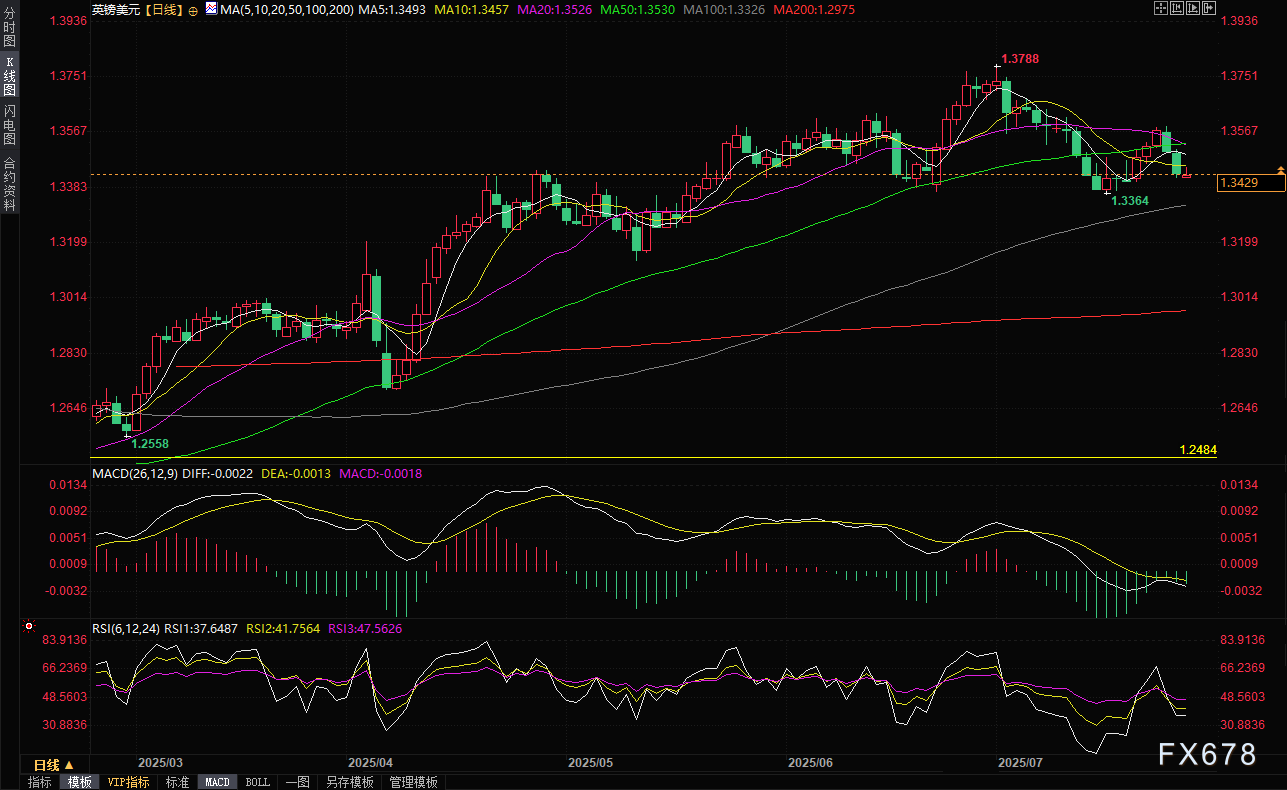
(GBP/USD daily chart, source: Internet)
At 14:12 Beijing time, GBP/USD is now trading at 1.3429/30.
Please indicate the source: https://daoctech.com/fxnews/1662.html
Disclaimer: The content of this article does not represent the views of the Institute of Foreign Exchange. The content is for reference only and does not constitute investment advice. Investors operate accordingly at their own risk.