
The gold market has experienced a huge earthquake, can the Super Week usher in a turnaround?
At the beginning of the new year, the global precious metals market saw a significant round of volatility. Gold prices fell rapidly from near historical highs, falling by nearly 10% in a single day, and silver prices fell even more significantly. This month's volatility is regarded by market observers as a more violent period in recent years, which not only poses a test of investors' mentality, but also triggers extensive discussions on the development of the market outlook. Despite some short-term selling pressure, the core value of gold as a traditional safe haven tool still exists, and macroeconomic uncertainties may still provide support for it. This week, the market will usher in a number of important events, and investors need to keep an eye on it.
This article will review recent market fluctuations, analyze the reasons behind them, and explore possible future directions and risks to be aware of, in order to help readers better understand current market conditions.
Market Review: Details of Recent Gold Price Volatility
The recent performance of the precious metals market has been impressive. Spot gold prices have fallen significantly from previous highs, hitting a lower level during the session. This is not only the largest one-day decline in a long period of time, but also the volatility range for the whole month has reached a high level.
Nonetheless, on a monthly basis, gold prices recorded some gains, continuing the upward trend of previous months. The correction in silver prices was more pronounced. Other precious metals such as platinum and palladium also saw a simultaneous correction.
Behind these price changes, investors choose to take profits after the price reaches a high level. The rapid switch in market sentiment in a short period of time highlights the volatile nature of the current market.
Reason analysis: Multiple factors jointly affect the market
The adjustment in gold and silver prices is the result of a combination of factors.
First, the change in monetary policy expectations in the major economies is a direct trigger. The shift in market expectations about the future path of interest rates has affected investors' preference for holding non-interest bearing assets. Until now, gold's rise had been driven in part by concerns about inflation. But the change in market sentiment caused by the adjustment in expectations has led to a rebound in the dollar exchange rate, which has weighed on dollar-denominated gold.
Secondly, changes in macro capital flows and real yield expectations have exacerbated the adjustment pressure on the market. Some analysts believe that there is a need for a technical correction in the market itself, and these factors together trigger profit-taking operations.
In addition, some institutional reports pointed out that the previous bullish positions accumulated in the market have not only strengthened the upward trend, but also paved the way for a price reversal. Some market participants regard this as a normal correction after a rapid rise, and the market seems to be waiting for an opportunity to change the previous unilateral trend. The performance of some recent economic data has also affected the market's expectations for easing policies.
Overall, the correction is the result of a combination of profit-taking, changing policy expectations and macro-level pressures. While precious metals have generally performed strongly since the start of the year, the recent volatility has also served as a wake-up call for market participants.
Outlook: How will gold prices play out?
Looking ahead, there is uncertainty about the direction of gold prices, but many analysts believe that this correction is not the end of the trend, but may be a necessary consolidation. Before the recent decline, the rapid rise in gold prices accumulated some adjustment pressure.
Some institutions remain relatively optimistic, predicting that gold prices may still have upside in the future, citing factors such as a potential monetary policy shift by major central banks that could weigh on the dollar and support gold prices. In addition, some macro-level structural factors may also provide support for gold.
Geopolitical uncertainties remain a key variable, and the dynamics of international relations could prompt some institutions to continue building up their gold reserves, which could provide long-term support for gold prices.
In the latest trading day, gold and silver prices opened lower in early Asian trading and continued to decline. Some signs of easing in the international situation may have some impact on safe-haven demand in the short term.
There are indications that interested parties have expressed a willingness to negotiate and believe that an agreement is possible. These developments could help ease some of the geopolitical tensions, which could weigh on gold prices in the short term. However, if subsequent negotiations do not go well or new uncertainties emerge, gold's safe-haven properties could come under renewed scrutiny.
This week's highlights
There will be a number of economic data releases this week that could provide clues to market trends: including manufacturing and services activity indices, labor market data, and policy statements from major central banks, all of which are worth investors' attention.
A recent market survey showed that analysts are divided on the short-term direction of gold prices, with some expecting prices to recover and others forecasting further adjustments. Retail investors are relatively optimistic. Overall, the bullish reasons are more focused on macro-structural support, while the bearish reasons emphasize the risk of technical overbuying and the possible revaluation of policy expectations.
Investment Tip: Recognizing the Dual Properties of Gold
Although gold is often seen as a "safe haven", its scarcity and independence from specific credit risks make it an asset allocation tool in an uncertain environment. But the recent correction from its highs has also revealed another side: prices are not only driven by fundamentals, but also easily amplified by market mood swings.
Some market participants cautioned that speculative premiums in the market could be affected if major central bank buying changes, the dollar strengthens on policy expectations, or geopolitical pressures ease. There is currently a range in analysts' average forecasts for year-end gold prices, with consensus prices in that range and a few more optimistic or cautious expectations.
The remarkable gains brought by gold in the past period are currently being tested. There is a view that there may be some valuation pressure as the price of gold has reached a high target level in a relatively short period of time. Investors need to pay attention to structural risks, such as changes in international relations or changes in investor sentiment that may lead to price revaluation. Despite the reliability of gold as a time-honored store of value, investors who wish to participate in it need to exercise caution, be aware of potential downside risks and remain rational in market fluctuations. Trading platform users like Ava should fully understand the characteristics of the market and do a good job of risk management.
To sum up, although the recent gold price correction is large, it may be a fluctuation in the overall trend. Although the short-term pullback brings pressure, it may also lay the foundation for subsequent movements. In the face of the evolution of the geopolitical situation and the intensive release of economic data, the gold price may find its way in the intertwining of long and short factors in the future. Investors need to weigh all factors and recognize that although gold is attractive, it also comes with risks. Only by remaining prudent in a complex environment can we better grasp market opportunities.
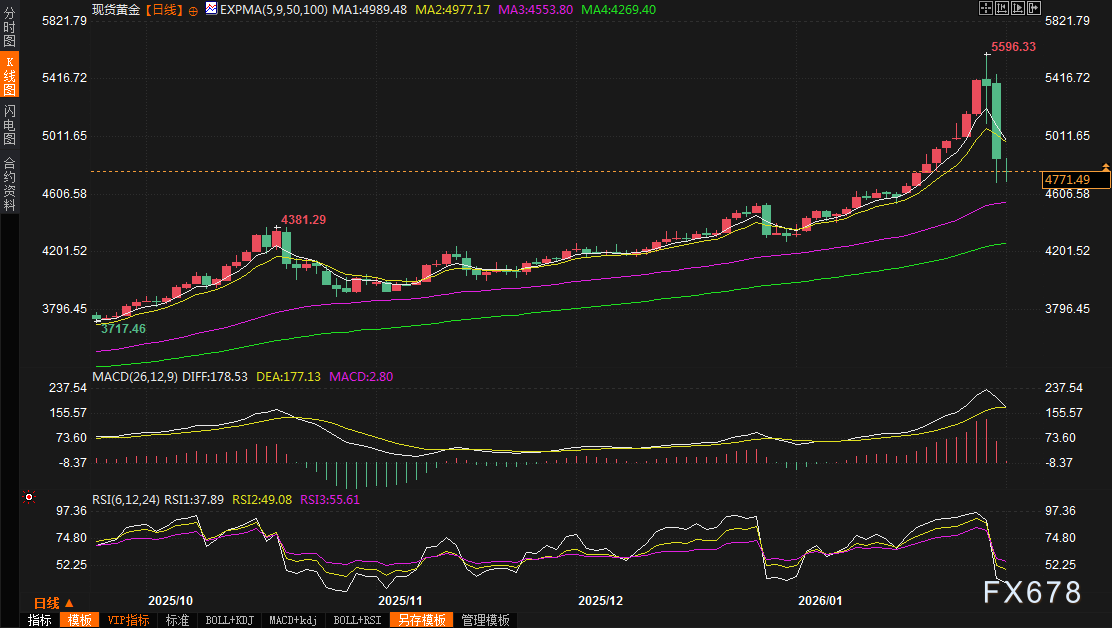
(Daily chart of spot gold)
As of press time, spot gold is reported at around $4,770 per ounce.
Please indicate the source: https://www.daoctech.com/fxnews/2233.html
Disclaimer: The content of this article does not represent the views of the Institute of Foreign Exchange. The content is for reference only and does not constitute investment advice. Investors operate accordingly at their own risk.