
Analysis of foreign exchange trading hours: Seize the best trading opportunities
foreign exchange marketAlthough it is open 24 hours a day, not all hours are equally active.
Investors can seize opportunities both when the market is booming and when the market is relatively flat.
However, when the market is illiquid, it becomes relatively difficult to trade profitably. Understanding the characteristics of different time periods is crucial for developing a trading strategy. This lesson will help you analyze the best Anzo Forex trading times during the day.

Main periods of the foreign exchange market
Before we can explore the best trading hours, we first need to understand the 24-hour operating framework of the global foreign exchange market.
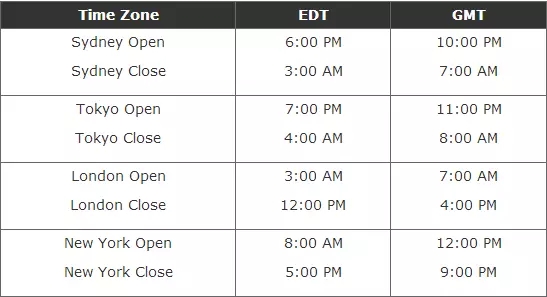
The market is usually divided into four main trading sessions:Sydney session, Tokyo session, London session and New York sessionThe following are the opening and closing times of each market during summer and winter time:
Daylight saving time (around April to October)
Winter time (around October to April)
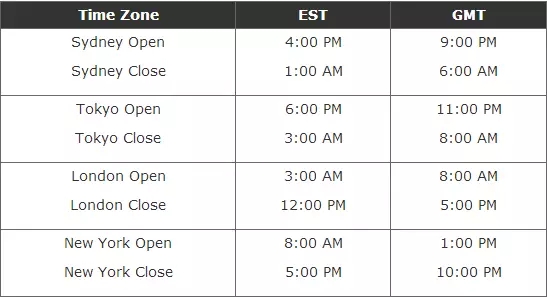
Looking at timetables, you can see that there is overlap between different time periods. For example, 3:00 am-4:00 am EST overlaps Tokyo and London, while 8:00 am-12:00 am overlaps London and New York.
Typically, overlapping trading sessions are the most active periods of the day for market activityBecause the two markets operate simultaneously, it brings greater trading volume and liquidity. This provides Anzo Forex traders with more profit opportunities, more active market participants, and more frequent capital flows.
It is worth noting the change in Sydney opening times. When the US enters winter, Sydney time is actually moved up by an hour, due to the opposite seasons in the northern and southern hemispheres. Investors planning to trade during these times need to be aware of this.
Next, let's take a look at the average volatility of major currency pairs during each trading session.
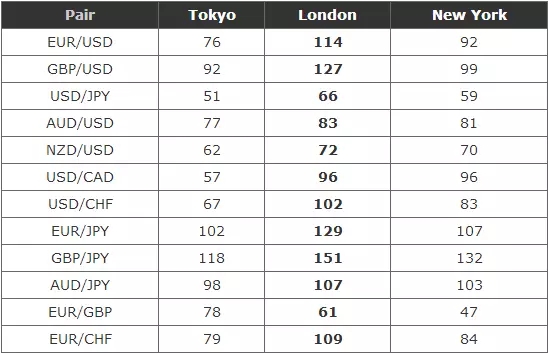
As can be seen from the chart, the average swing in points during the European session is usually the largest.
Let's take a closer look at the characteristics of each trading session and its overlapping periods.
Tokyo trading hours (Asian session)
At 7:00 PM EST, the Asian foreign exchange trading session begins. Tokyo is an important financial center in Asia, so this session is also often referred to as the Asian session.
Japan is the third largest foreign exchange trading center in the worldThe Japanese yen is also the third most traded currency, accounting for about 16.5% of global foreign exchange trading volume. The entire Asian session accounted for about 21% of global trading volume.
The following are the average volatility points for major currency pairs during the Asian session:
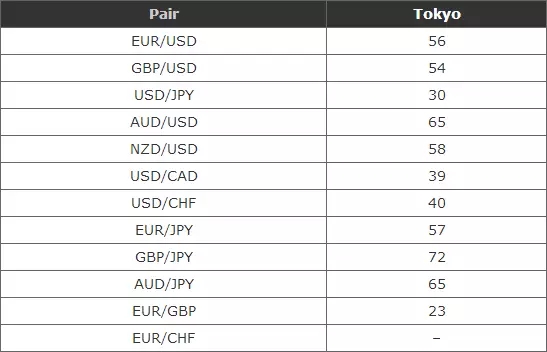
The main features of the Tokyo session include:
Trading activities are not limited to Japan, but also include other Asian financial centres such as Hong Kong, Singapore, and Sydney.
★ The main players are exporters and the central bank. Japan's economy is highly dependent on exports and has a large number of transactions with trading partners such as China;
Market liquidity is sometimes relatively light, and without major events, trading may not be active enough.
Asia-Pacific currency pairs, such as AUD/USD and NZD/USD, are generally more liquid than non-Asia-Pacific currency pairs such as GBP/USD.
When liquidity is weak, a currency pair may fluctuate within a certain range, providing opportunities for short-term trading or waiting for a breakout.
Most transactions take place early in the session, as more economic data is released at this time, and market volatility may increase.
The trend of the Tokyo session sometimes sets the tone for the subsequent market of the day.
After experiencing large fluctuations in the overnight New York session, the Tokyo session often enters a sideways trade.
Currency pairs suitable for trading
After the opening of Tokyo, news from Australia, New Zealand and Japan will influence the market, providing opportunities for news traders. At the same time, the volatility of the yen may increase. The influence of Chinese economic data cannot be ignored, often triggering large fluctuations in the Australian dollar and Japanese yen currency pairs.
London trading hours
As Asian markets approached close, traders in Europe had just started their day's work. London is the world's most important foreign exchange trading center, accounting for about 41% of the world's trading volume.
Due to its location and historical position, London has always been at the heart of international trade and finance. About 30% of the world's foreign exchange transactions take place during the London session.
The following is the average range of trading points for major currency pairs during the London session:
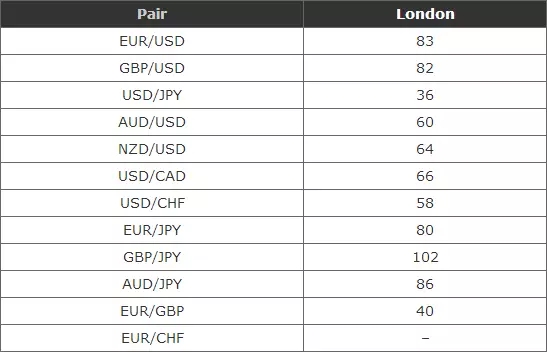
Key features of the European time slot:
Undertake the Tokyo and New York hours, and as a key financial center, with huge trading volume, high liquidity, and generally low transaction costs (such as spreads).
Due to the frequent high-value transactions, this period is often one of the most volatile periods in the market.
Many market trends began during the London session and may continue into the New York session.
The middle of the session may be slightly calmer due to traders' lunch break.
Late in the session, European traders may take profits, leading to a correction in the trend.
Currency pairs suitable for trading
Due to the huge liquidity, this period is suitable for trading most currency pairs.
The most ideal are usually EUR/USD, GBP/USD, USD/JPY, and USD/CHF, as these currency pairs have the lowest spreads, and is directly affected by the European time news. Crosses such as EUR/JPY and GBP/JPY can also be volatile, but spreads are usually higher.
New York trading hours
U.S. markets opened at 8:00 a.m. Eastern time as European traders returned from their lunch break. New York is the core financial center of the Americas.
The following are the trading ranges of major currency pairs during the New York session:
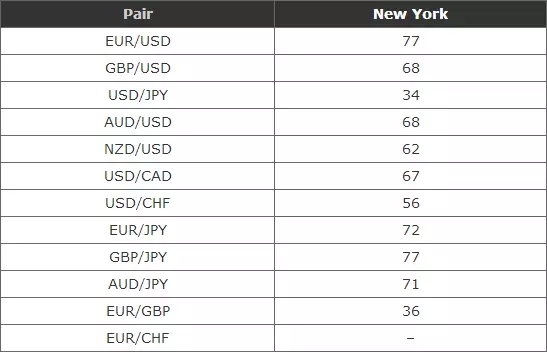
New York session trading highlights:
Early trading is highly liquid due to overlap with the European session.
★ A large amount of US economic data is released during this period. Since about 85% of transactions involve the US dollar, good or bad data often causes significant market fluctuations;
After the European market closes, the afternoon liquidity and volatility in the United States usually decrease.
Friday's late trading volatility is often small.
★ Also on Friday, there may be a price reversal caused by a position adjustment in late trading.
Currency pairs suitable for trading
When the European and American time slots overlap, liquidity is excellent and common currency pairs can be traded. Due to the central position of the US dollar in trading, US economic data and monetary policy movements are closely watched, often resulting in large fluctuations in the US dollar and related currency pairs. For Anzo Forex participants, understanding the characteristics of these time slots is fundamental.
Trading Session Overlap Period Analysis
The most liquid periods in the market usually occur when two trading sessions overlap. This is similar to prime time on TV, with more participants and more active trading.
Tokyo-London time slot overlap
Liquidity is usually low during this period, as Asian afternoon markets flatten and European traders are just starting to get in the groove. This is a good time for traders to analyze calmly and prepare for the follow-up London and New York sessions.
London -New York trading hours overlap
This is the busiest and most volatile period of the day. Traders in London and New York are active in the market at the same time.
Economic data from the United States and Canada are often released here, causing large market fluctuations. Trends established in the European session are also often continued during this overlapping period. However, late-day position squaring by European traders could also lead to some mid-day volatility in New York.
The best trading hours during the week
Not only is there a best time of day, but there are also days of relatively active trading during the week. The table below shows the average pip range for each major currency pair during the week:
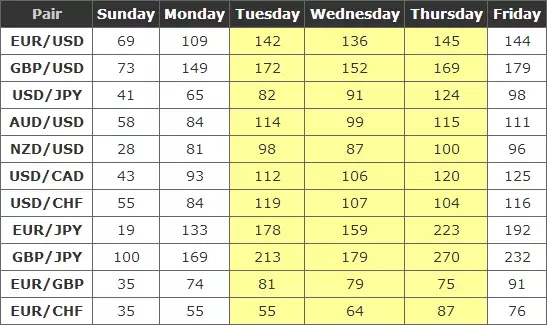
As the chart shows, the middle of the week (Tuesday through Thursday) is usually the most active period for trading and the most potential opportunities.
Fridays can still be busy until 12 noon EST, but markets tend to calm down after that until the close. The busiest period usually means more trading opportunities and a higher probability of winning.
Plan your trading hours reasonably
The Forex market is open all day, but that doesn't mean you need to trade all the time. Adequate rest is essential to maintaining clear trading decisions. Every trader, including Anzo Forex learners, needs to learn when to trade, but also when to wait and see.
Knowing the best and worst trading times can help manage risk and reduce unnecessary losses.
Transaction Time Guide Summary:
The best time to trade:
A period when two trading sessions overlap. In addition, major economic data, central bank speeches, and other events can also trigger market volatility and create trading opportunities. It is necessary to pay attention to the economic calendar. The European session is usually the busiest of the three. The middle of the week is often the most volatile and active time.
The worst time to trade:
★ Sunday - market participation is extremely low;
★ Friday - afternoon liquidity is thin in New York;
Holidays - most markets around the world are closed.
★ Before major events are announced - the market direction is uncertain;
★ During major global cultural and sports events - traders are distracted.
Don't worry if you can't trade at the best time. Investors can turn to range trading or long-term investment strategies. Next, we will continue to explore how to find opportunities in the market.
Please indicate the source: https://www.daoctech.com/fxnews/2252.html
Disclaimer: The content of this article does not represent the views of the Institute of Foreign Exchange. The content is for reference only and does not constitute investment advice. Investors operate accordingly at their own risk.