
Walsh chaired the Federal Reserve meeting for the first time to affect the whole market; preparations for the US-Iran agreement advanced steadily
The two sides are preparing for the signing ceremony of the agreement to be held in Switzerland this Friday, and more details of the agreement will be gradually disclosed. The core provisions include two: Iran will be allowed to temporarily resume oil exports, which will put significant downward pressure on energy prices; and the United States plans to establish a US $300 billion Iran Reconstruction and Development Fund. Of course, the above two preconditions are that the two sides reach a permanent agreement to completely resolve the issue of Iran's nuclear program and deal with the existing stockpile of highly enriched uranium.
At the same time, the Israeli leadership has continued to publicly express its strong dissatisfaction with the latest negotiations. The Iranian side tried to tie the agreement to Israel's military operations in Lebanon, but in the end, Iran is likely to only win the Trump administration's commitment to help mediate the situation in Lebanon, and cannot use this to hinder the implementation of the US-Iran agreement.
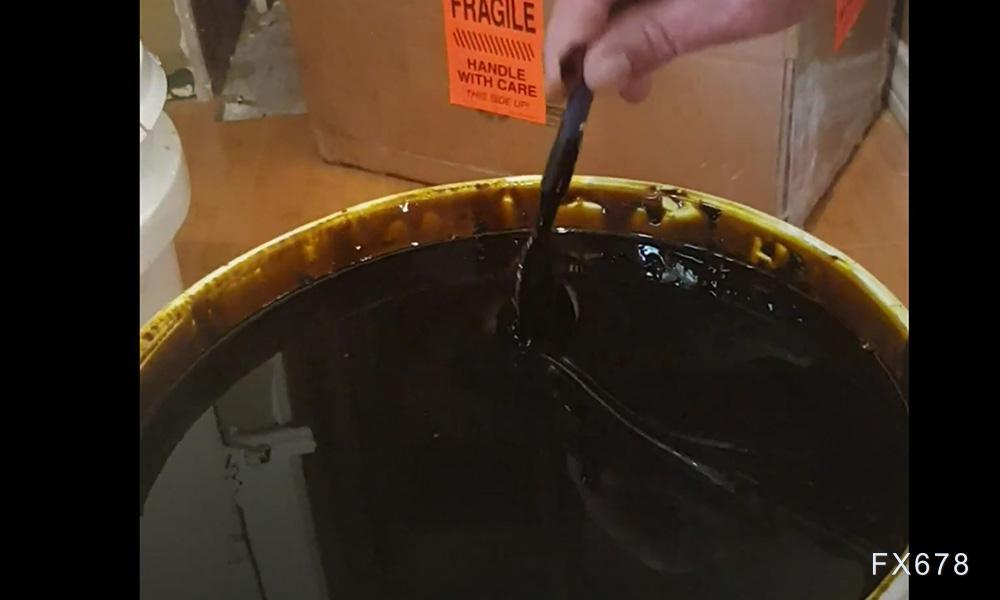
Despite the risk of sudden uncertainties before the signing of the agreement, international oil prices continued to decline. The spot price of West Texas Light Crude Oil (WTI) in the United States fell to the lowest level since the beginning of March, falling by about 36% from the high point, and the oil price premium caused by geopolitical conflicts was basically digested. However, the price of WTI crude oil futures for December delivery hovered at $72, returning to the level of mid-April, which also indicates that the cycle of global crude oil supply channels returning to normalization may be much longer than the major investment banks had optimistically anticipated.
What is intriguing is that, although the US and Iran released positive news, and the decline in oil prices is theoretically good for the global economy, the major risk assets fell into a sideways fluctuation after opening higher on Monday, and the trend basically followed the US dollar. According to the previous pattern, stock market investors usually pushed up the stock index in the face of such positive news of risk appetite, and this time the market reaction was unusually flat. The implied volatility of the S & P 500 index fell to the low level of the year in one month, after the previous volatility surge has been completely reversed. The source of this abnormal calm in the market may be today's heavy-hitting Federal Reserve interest rate meeting.
Can Warsh set the tone of Fed policy?
The current market attention is all on today's Federal Reserve interest rate meeting. Although the probability of raising or cutting interest rates this time is almost zero, the meeting is still very interesting. This is the first time Kevin Warsh has chaired the interest rate meeting since becoming the chairperson of the Federal Reserve. Since being sworn in, Warsh has deliberately remained silent and has not made any public remarks.Daocheng ForexTherefore, the importance of the press conference after Wednesday's meeting has increased significantly.
The market expects Warsh to announce a number of policy adjustment plans at the press conference: the introduction of new inflation observation indicators, the reduction of the balance sheet, and the tightening of the inflation target range, in order to ease the pressure of extreme hawkish officials within the FOMC (FOMC). Warsh has been favored by the Dallas Fed's truncated mean personal consumption expenditure price index (PCE), which recorded only 2.3% in April, far below the inflation data of the continuously rising consumer price index (CPI), the overall PCE, and various research statistics.
Convincing the FOMC officials to tone down their tough language would have been a huge problem for Warsh, but the Middle East, the US-Iran agreement and the continued decline in oil prices have provided strong support for him. In addition, the Federal Reserve's regular economic forecast summaries and dot plots may lag significantly behind the current market environment, which will further support Warsh's policy tendency to downplay forward guidance.
However, the dot plot and the economic forecasts of the Fed's internal economists may weaken the strength of the new chairperson's moderate and balanced statement. If Walsh releases a hawkish signal, the dollar is expected to strengthen, but the pressure on the stock market will limit the dollar's gains; conversely, if the Fed's overall statement is neutral and the forward guidance is greatly weakened, the dollar may weaken. In this scenario, the euro is expected to continue the recent rally against the dollar, but the euro area itself lacks a strong positive driver, and the upside is limited.
The future of the yen and the pound is uncertain
The UK May CPI data was lower than expected, but failed to provide a boost to the pound. The market expects the Bank of England to maintain a neutral stance at its interest rate meeting tomorrow, and the final policy orientation of the Bank of England depends largely on the outcome of the Federal Reserve meeting tonight.
On the other hand, the dollar against the yen slightly tested below 160, and the current market volatility is only the position adjustment before the Federal Reserve meeting. Bank of Japan officials are ready. If the Federal Reserve meeting says that it will push up the dollar, the Bank of Japan may enter the foreign exchange market overnight.
Please indicate the source: https://www.daoctech.com/fxnews/2709.html
Disclaimer: The content of this article does not represent the views of the Institute of Foreign Exchange. The content is for reference only and does not constitute investment advice. Investors operate accordingly at their own risk.