
FX today analyzed the most important driver of the US dollar
As a buzzword on the 2023 financial marekt, "de-dollarization" seems a bit of a sham, as it did not stop the dollar from continuing its sharp rally in August.
The question is whether this trend can be sustained.
The ICE Dollar Index, a measure of the dollar against six major currencies including the euro and yen, fell to a 15-month low in mid-July before rebounding about 4 percent, according to FactSet. It was up about 1.7 percent in August. That's enough to allow the index to recoup its losses so far in 2023 and is up 0.4 percent year-to-date.
What made the dollar "turn around"?A series of strong economic data has made the U.S. economy look stronger than its competitors, which may be the most important reason.
Kit Juckes and Olivier Korber, strategists at Socie ́ te ́ Ge ́ ne ́ rale, said in a note on Thursday that "returns on the dollar index over the past month appear to have been significantly influenced by changes in expectations for US GDP growth in 2024 from the previous quarter and we expect this trend to continue".
"The fact that the US is the only G10 economy to have its growth forecast revised up helped the dollar outperform the other G10 currencies - the world's 10 most traded and liquid - this month," they wrote.
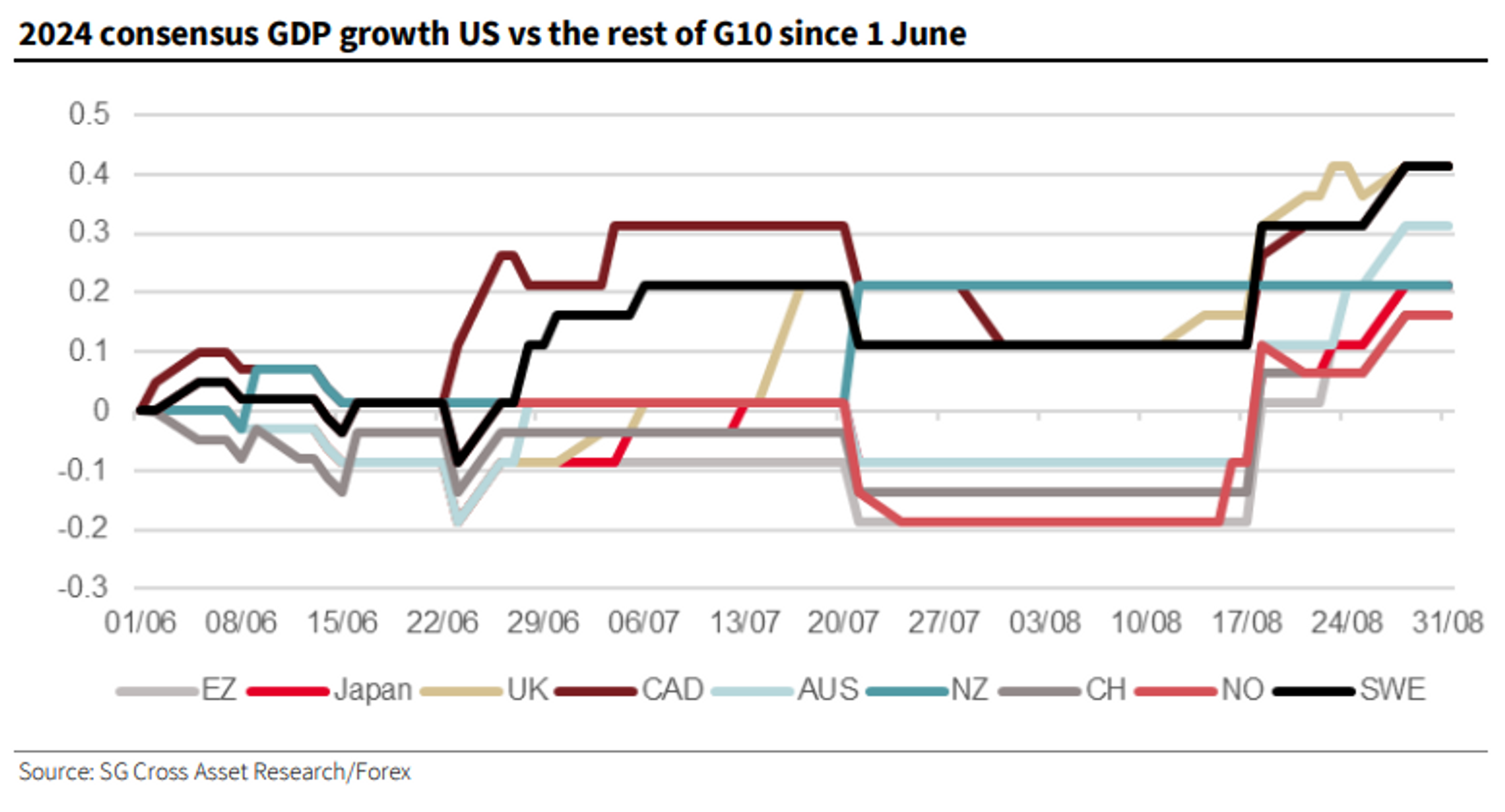
The chart above shows the change in U.S. GDP growth forecasts relative to other G10 countries since the end of May.Among them, the situation since the end of July has been "shocking", with the US GDP growth forecast higher than that of all other countries, "This has sent the dollar higher ". At the same time they also questioned,"Is the upward revision for U.S. economic growth too optimistic??”
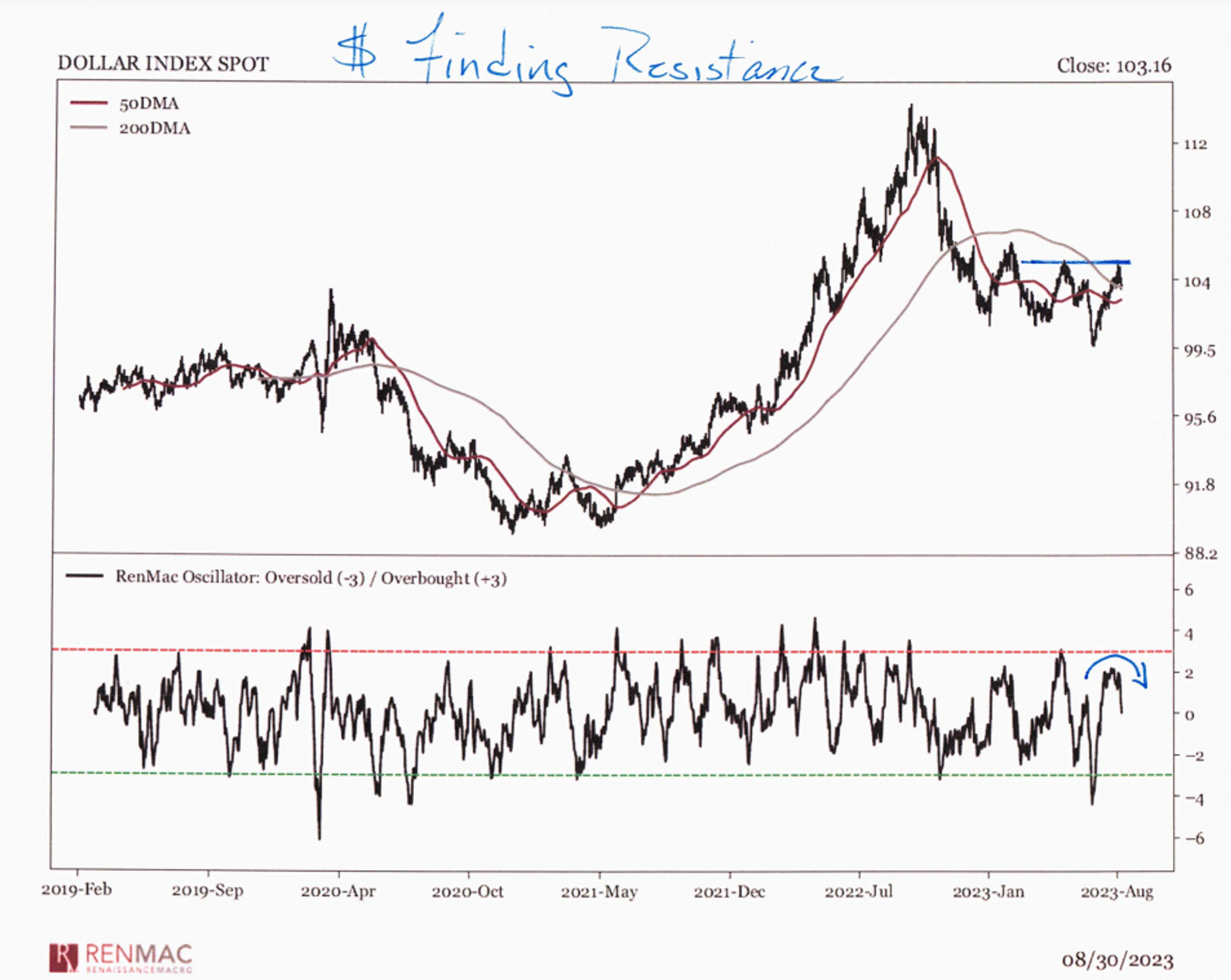
Time will tell if resilient US economic data will continue to surprise. Meanwhile, one of Wall Street's most closely watched technical analysts was not too impressed by the dollar's gains in August, which weakened somewhat as Treasury yields retreated.
Jeff deGraaf, chairperson and head of technical research at Renaissance Macro, said in a note on Thursday that "the narrowing of U.S. Treasury yields has deprived the dollar of some upward momentum, and the dollar has been blocked from falling back."
The dollar's rise came as strong economic data pushed Treasury yields higher and investors raised expectations for further rate hikes by the Federal Reserve.
FXTFX noted that the 10-year Treasury yield traded near a 16-year high above 4.30 per cent earlier in August before retreating. The 2-year yield edged above 5 per cent last week but has since fallen below that mark as well.
Currency exchange rates tend to be the most sensitive to short-term interest rates and differences in interest rates between countries. Affected by this, the dollar index fell, De Graaf wrote, "While the recent rally has not pushed it into overbought levels, butThe better risk-reward ratio seems to point to a weaker dollar”。
Please indicate the source: https://www.daoctech.com/fxnews/688.html
Disclaimer: The content of this article does not represent the views of the Institute of Foreign Exchange. The content is for reference only and does not constitute investment advice. Investors operate accordingly at their own risk.