
Wall Street's'fear gauge 'to surge 1100 per cent? Traders bet boldly on'doomsday'
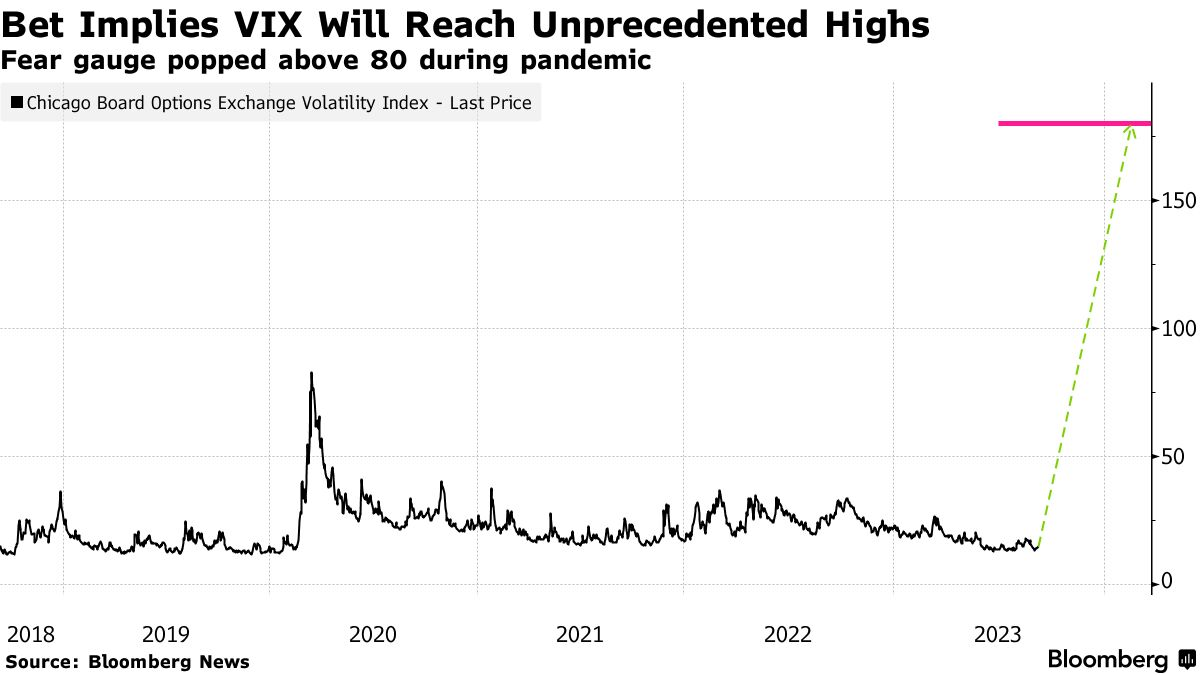
The Chicago Board Options Exchange Volatility Index (CBOE VIX), also known as the "fear index"It has never broken above 35 this year, but some traders are betting that the index will soar to 180 in the coming months.
A trader made a bold bet on Thursday for $30,000,If Wall Street's so-called "fear gauge" rises more than 12-fold next year before it expires on February 14, he will be rewarded.
It is worth mentioning that,Since the launch of the VIX in 1993, the index has never even reached 100 points.The closest it came was during the financial crisis in late 2008, when the index hit 89.53, just half the current trading expectations.
The transaction took place shortly after the start of normal trading hours on Thursday.The VIX index is expected to climb 1,100% over the next five months.
This is not the first time investors have bet on the seemingly impossibleThere have beenIndustrial foreign exchangeTraders bought more than 20,000 unpositioned squaring contracts for December options on the VIX at the same strike price. In the past few weeks, 5,000 of these December contracts have changed hands twice, while the VIX has also emerged from the summer slump to above 15, its year-to-date peak.
Of course,In the derivatives world, people don't always bet on what they think will happenThe deal could be part of a larger strategy.
"The only logical reason is,They short calls with lower call-over prices to gain premium, and gain some protection by going long calls with higher call-over prices, even if those calls are deep out-of-the-money options", said Steve Sosnick, chief strategist at Interactive Brokers.
Assuming the VIX unexpectedly hits 180, these options will go from out-of-the-money to in-the-money. But in this case, traders may have more pressing issues at hand.
“The problem with betting on the end of the world is, if you're right, how do you get paid for it?"Sosnick asked.
Please indicate the source: https://www.daoctech.com/fxnews/720.html
Disclaimer: The content of this article does not represent the views of the Institute of Foreign Exchange. The content is for reference only and does not constitute investment advice. Investors operate accordingly at their own risk.