
Why is gold valuable? What is the true value of gold?
Gold has held special practical and symbolic value to humans since ancient civilizations. It has also been used as a currency for exchange, as a store of value, and as valuable jewelry and other artifacts. And its sheen and metallic texture, relative scarcity, and difficulty in mining have increased awareness of gold as a valuable commodity.
Why is gold valuable?Daocheng Technology FinanceThe value of gold is ultimately a social construct: it is valuable because we all think it will be valuable in the future.
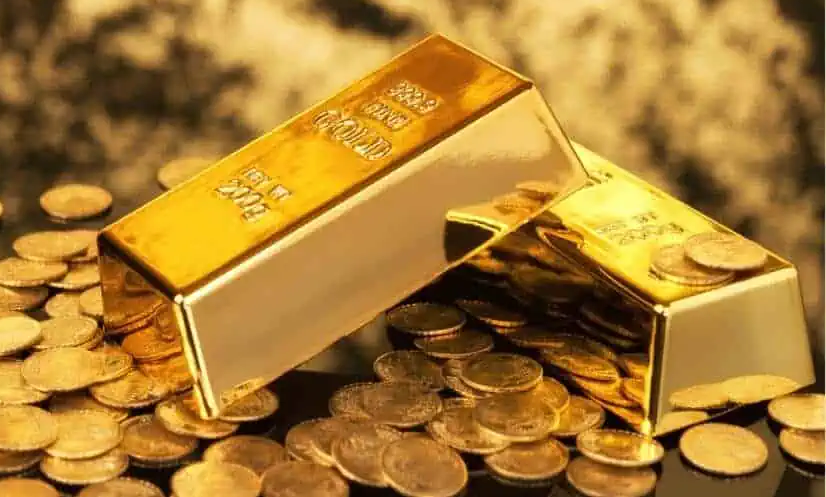
Why is gold valuable?
Where exactly is the value of gold? Some argue that gold has no intrinsic value. It is a relic of an ancient civilization that no longer has the monetary qualities of the past. They argue that in the modern economy, paper money is the currency of choice; gold's only value is as a material for making jewelry.
Others argue that gold is an asset with various intrinsic characteristics that make it unique and necessary for investors to hold it in their portfolios.
But in addition to these specific values, we need to add another feature of gold that is hard to pin down, but no less true: its mystery. Part of gold's charm lies in its mystery.
Also, gold can stimulate the subjective experience of the individual. Gold can be a quantitative, tangible thing like money. At the same time, it can also embody something temporary, such as a feeling or even a chain of feelings. So part of the reason why gold has always been valuable is the psychological and essential experience of people.
The unique properties of gold
Our ancestors were faced with coming up with a method of exchange that would be easier to implement than bartering. Coins are such a medium of exchange. Of all the metals on the periodic table, gold is the logical choice. We can rule out elements other than metals because gas or liquid money is not very practical from the perspective of personal portability. This leaves iron,copperLead, silver, gold, palladium, platinum, aluminum and other metals.
Iron, lead, copper, and aluminum. These metals were prone to corrosion over time, so they were not cost-effective for storage, which was very demanding on coins. It was also very labor-intensive to keep metals from corroding. Aluminum felt light and meaningless, which was not ideal for coin metals that evoked a sense of security and value.
Precious metals, platinum (see:International platinum price) orpalladiumThey are reasonable choices because they do not react to most other elements, that is, they produce little corrosion, but they are too rare to produce enough coins to circulate. In order to give value to a metal, it must be somewhat rare so that not everyone is producing coins, but there must also be enough supply so that a reasonable amount of coins can be created for commerce.
So the properties of gold and silver are completely in line with people's requirements for coins. Gold does not corrode and can be melted on flames, so it is easy to process and stamp as coins. And silver and gold are beautiful metals that can be easily made into all kinds of jewelry.
Although silver can also be polished and textured in many ways to attract light and attention, there is still no metal like gold. Unlike other elements, gold naturally has a range of subtle unique and beautiful colors.
Gold's atoms are actually heavier than those of silver and other metals, a property that allows electrons to move faster, allowing some of the light to be absorbed by the gold.
Psychological and social effects of gold
If the modern paper money economy collapses, gold may not come in handy immediately when panic sets in and people fight for basic needs, but it will eventually.
Humans are social animals. We prefer the company of other humans (to varying degrees) to complete independence. Working in groups is easier than trying to live alone. This human trait forces us to find ways to cooperate, which in turn allows us to find ways to exchange goods and services conveniently and efficiently.
What are the uses of gold?
In addition to the demand for gold in the form of nuggets, the metal has important industrial uses. According to the US Geological Survey, 50% of gold is used to make jewelry, 37% for appliances and electronics, 8% for official coins, and 5% for other uses.
How strong is the value of gold?
The answer to this question could fundamentally solve the question of why someone would invest in gold.
Since 1970, the price of gold has risen nearly 4,800%. By comparison, the stock market, as measured by the S & P 500 Index, opened at 90 in 1970. It is now around 3,000 points, a cumulative gain of more than 3,300%.
No matter how gold performs during stock market downturns, it has easily outperformed stocks over the past 50 years.
summary
Why is gold valuable? From an elemental perspective, gold is the most reasonable choice for the medium of exchange for goods and services. The metal is abundant enough to make coins, but rare enough that not everyone can produce it. Gold does not corrode, providing a sustainable store of value that humans are attracted to physically and emotionally. Societies and economies both ascribe value to gold, thus perpetuating its value.
When other forms of money have failed, gold is the metal we rely on for survival, which means that gold will be valuable in both difficult and good times.
Please indicate the source: https://www.daoctech.com/fxoutrade/1088.html
Disclaimer: The content of this article does not represent the views of the Institute of Foreign Exchange. The content is for reference only and does not constitute investment advice. Investors operate accordingly at their own risk.