
What is a foreign exchange swap?
existforeign exchange marketYou will meet many strangerstechnical termsOne of the terms isforeign exchange swap(Swaps). This type of trading actually accounts for the most important part of the foreign exchange market. Here, we will explain in general what is a foreign exchange swap? What are its advantages and risks?
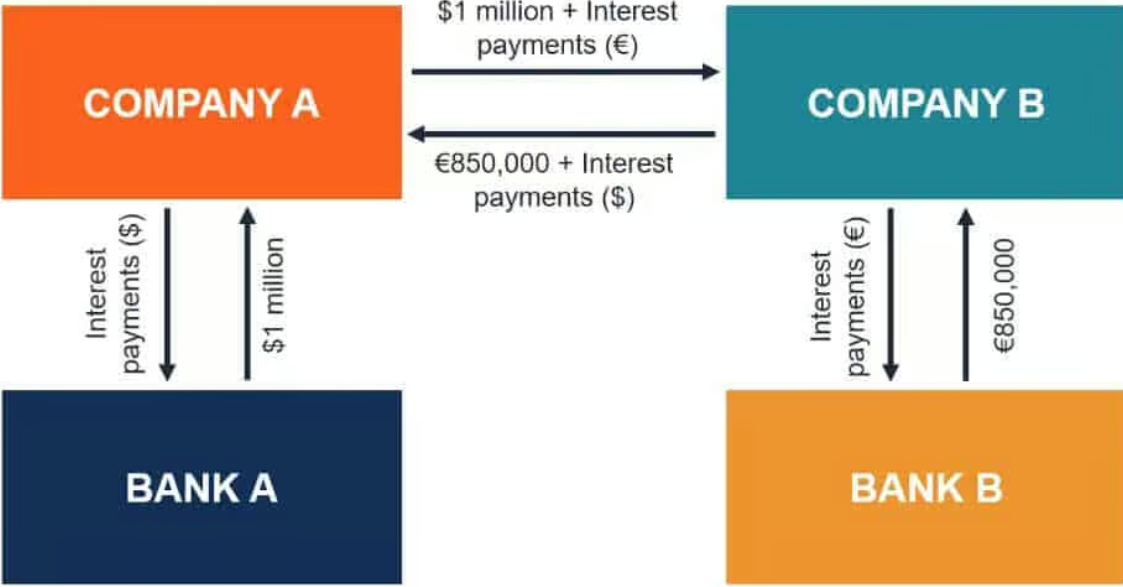
Participants in foreign exchange swaps
Foreign exchange swaps used to be a common tool for people in countries with highly volatile foreign exchange rates, or as a mechanism to break through currency restrictions.
As investors and companies increasingly become multinational companies, the use of foreign exchange swaps is increasing around the world. Here are a few examples of the beneficial effects that foreign exchange swaps can have in today's foreign exchange market.
Foreign exchange swaps may be one of the more common financial instruments used by companies doing business abroad. When they need to borrow money to do business abroad, they cannot obtain favorable loan terms from overseas banks. Therefore, if they can borrow money at the best terms in their home country and find companies with similar business needs abroad for foreign exchange swaps, without borrowing abroad or cross-border transfer, then this transaction may be beneficial to all participants.
For institutional and retail investors who know that their home currency is unstable. This is the main purpose of participating in a foreign exchange swap to protect against currency risk in a volatile currency. By participating in a foreign exchange swap, both parties can set terms and have a certainty about their transaction costs.
Foreign exchange swaps are most commonly used by companies and other types of institutional investors, which is certainly a more common situation than retail investors using foreign exchange swaps.
The risk of foreign exchange swaps
While foreign exchange swaps can be beneficial in most situations, just like any form of trading, they are not completely risk-free. Here are a few of the main risks you may encounter if you participate in a foreign exchange swap.
Interest rate fluctuations: Interest rates are usually floating in contracts. Therefore, changes in exchange rates may negate any cost savings you hope to gain from foreign exchange swaps.
Exchange rate: The most important risk may be the exchange rate. This is usually preset in the swap contract and is a fixed exchange rate at the expiration of a future transaction. Here, it is also possible that the future exchange rate will be worse for one party than the original or current exchange rate. In this case, there may be a loss on the swap.
The cost of foreign exchange swaps
If you are trading on a foreign exchange platform, you will definitely encounter swap fees as well. This can also be referred to as an overnight fee, or rollover fee, and can sometimes be confused with a foreign exchange swap.
This is a "fee", although it can be positive or negative, for overnight positions you hold when trading through a forex broker. This amount is constantly changing and essentially represents the difference in interest rates for currency pairs you hold. So long positions in certain currency pairs may receive an overnight fee, while short positions will pay an overnight fee, perhaps in reverse.
summary
Although foreign exchange swaps are usually an area of greater concern for more experienced institutional traders, they still play a huge role in foreign exchange trading and are a very useful trade to watch out for.
If you are looking for the safest way to handle large amounts of foreign exchange and want to add some level of security or control to your transactions over a long period of time, then you can try the operation of a foreign exchange swap.
Please indicate the source: https://www.daoctech.com/fxoutrade/1138.html
Disclaimer: The content of this article does not represent the views of the Institute of Foreign Exchange. The content is for reference only and does not constitute investment advice. Investors operate accordingly at their own risk.