
German lawmakers and experts urge that New York's gold reserves should be repatriated
Following recent changes in transatlantic relations, some German lawmakers and top economists have renewed calls for the repatriation of thousands of tonnes of the country's gold reserves held in the US, arguing that the current external environment is uncertain and that continuing to store large amounts of gold overseas could be risky.
Emanuel Moench, a prominent German economist and former head of the Bundesbank's research department, told the media recently: "Given the current geopolitical situation, it seems risky to store such a large amount of gold in the United States. In order to increase its strategic independence from the United States, the Bundesbank should consider shipping this gold back to its home country."
It is understood that Germany's total sovereign gold reserves are 3,350.25 tons, second only to the United States with 8,133.46 tons. However, about 37% of that, or 1,236 tons, is currently stored in the Federal Reserve's vaults in New York.
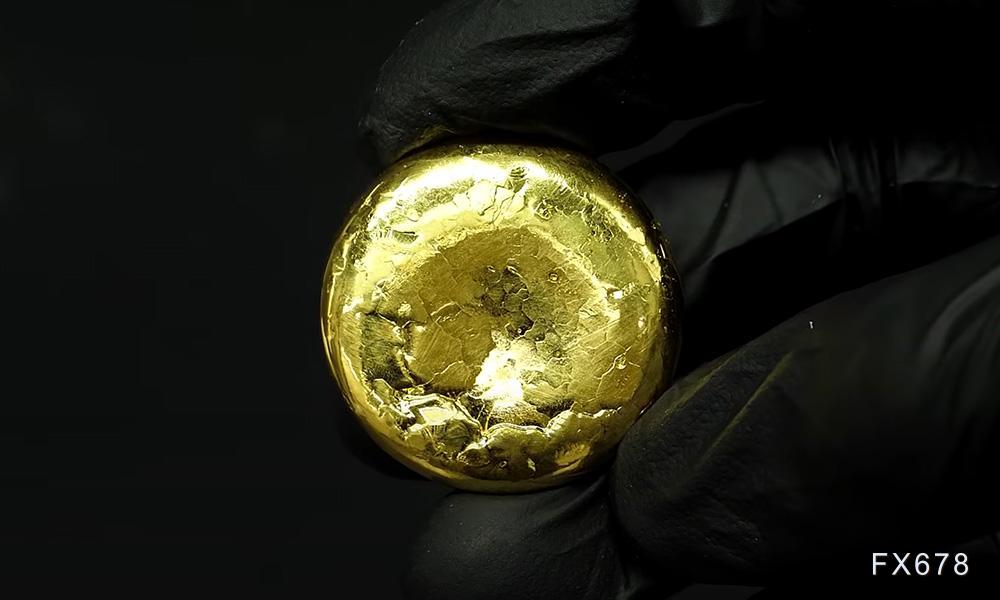
Michael Jaeger, head of the European Taxpayers' Association and the German Taxpayers' Association, also again urged Berlin to repatriate its US reserves as soon as possible. "The current policy direction is unpredictable and the other side may resort to various means to obtain benefits, which is why our gold is no longer safe in the Fed's vaults," Jaeger told local media.
He further speculated: "What if some of the controversial behaviour continues? The risk is growing that the Bundesbank may no longer be able to access its gold reserves. Therefore, it should repatriate the reserves."
Katharina Beck, finance spokeswoman for the opposition Green party in the German parliament, also called for the return of gold, calling it "an important guarantee of stability and trust" and saying the reserves "must not be used as collateral for certain disputes".
However, the ruling Christian Democratic Union party has so far rejected these requests. Stefan Kornelius, a spokesperson for the coalition government, said recently that the return of gold reserves is not being considered for the time being. The president of the Bundesbank also tried to allay lawmakers' concerns, with Joachim Nagel, president of the Bundesbank, telling participants at the October meeting of the international monetary fund in Washington DC that there was "no need to worry" about the safety of Germany's deposits at the Federal Reserve.
Concerns about the safety of Germany's reserves have intensified over the past year with a succession of tough and unpredictable international policies. In April, senior officials in Germany's newly elected Christian Democratic Union-led government discussed the feasibility of repatriating gold, fearing that the United States was no longer a fully reliable partner.
"Of course the problem has arisen again," Marco Wanderwitz, a former CDU minister who in 2012 tried to lobby for a visit to New York to inspect the gold reserves but was rebuffed, told the media. He called for a policy that would allow German officials to regularly inspect the gold or ship it back to Germany.
Markus Ferber, a member of the European Parliament at Christlich Demokratische Union Deutschlands, made a similar point to the media, insisting that German officials should personally inspect the gold reserves held in the US. "I demand regular checks of the German gold reserves," he said. "The official representative of the Bundesbank must personally count the gold bars and record the results."
Ferber and Wanderwitz had spoken to the media before early April about the verification of gold reserves. With international economic and trade relations fluctuating, billions of dollars of gold seem more distant and insecure than ever.
It is understood that about half of Germany's sovereign gold is held in Frankfurt, about 30 per cent at the US Federal Reserve, another 13 per cent at the Bank of England in London and the rest in France. Asked about the possibility of repatriating gold from the US, the Bundesbank insisted it had full confidence in the safety of the gold. "We have a trusted and reliable partner at the Federal Reserve in New York who is responsible for the custody of our gold reserves," Joachim Nagel, Bundesbank president, said at a press conference in February, stressing again in April that "this does not keep me up at night, I have full confidence in my counterparts at the US central bank."
But security and access are not the same thing, let alone subsequent transfers, which are the difference between checking a bank account balance and emptying it. Since 2013, the Bundesbank has successfully carried out an operation to bring large amounts of overseas gold home. By 2020, 300 tonnes of gold had been shipped back from New York and about 374 tonnes from Paris, for a total of about 674 tonnes transferred to Frankfurt.
At present, the Federal Reserve Bank of New York is still the largest gold custodian in the world. It holds about 6,300 tons of gold on behalf of more than 30 foreign central banks. In this context, investors keep an eye on the dynamics of the gold market on platforms such as Industrial and maintain a high level of interest in related issues.
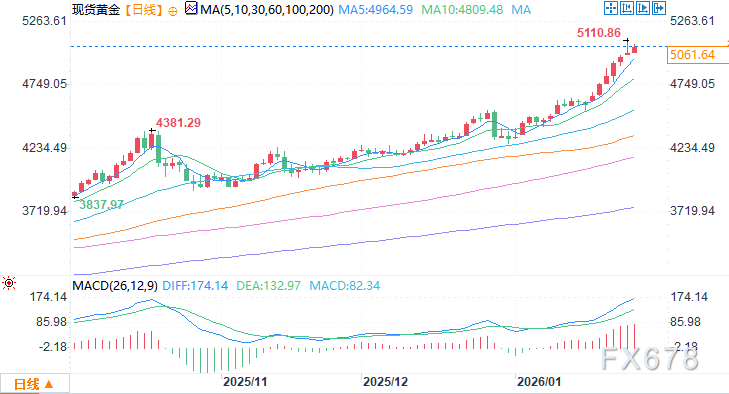
(Daily chart of spot gold)
At 13:02 on January 27, Beijing time, spot gold was quoted at $5,061.64 per ounce.
Please indicate the source: https://www.daoctech.com/fxoutrade/2295.html
Disclaimer: The content of this article does not represent the views of the Institute of Foreign Exchange. The content is for reference only and does not constitute investment advice. Investors operate accordingly at their own risk.