
The weakening of the US dollar has attracted attention, how do we see its future trend? XM Forex Observation
On Tuesday local time, after a policy statement regarding the US dollar exchange rate, the US dollar continued to decline, and the selling pressure has further emerged recently. The US dollar index fell to a four-year low of 95.57 at one point. During the weekly session in Sanya, the US dollar index rebounded slightly, after a significant decline in the previous four trading days. It is now trading around 96.05, with a intraday increase of about 0.3%. In the discussion of XM foreign exchange market, some opinions believe that short-term technical corrections still cannot change the weak signal of the US dollar.
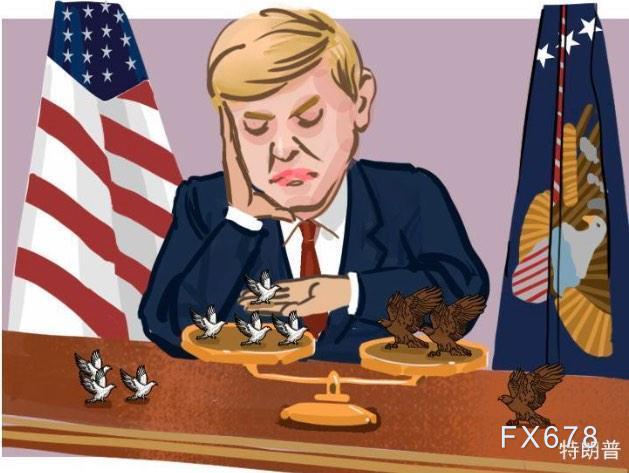
When asked if they were concerned about the currency's decline, the relevant statement stated that they were not worried about the weakening of the US dollar and believed that from a business perspective, the US dollar was performing well.
This statement adds pressure to the decline of the US dollar. The previous adjustment of trade policies has increased market volatility and heightened concerns among overseas funds about policy fluctuations. After Tuesday's comments, the US dollar weakened against all major currencies.
The relevant statement was seen by traders as a signal to sell the US dollar, indicating that the policy is open to a weak dollar to boost exports.
Wen Ting, Chief Economist of Naso Bank, said that the relevant statement "triggered another round of selling" and may trigger further decline of the US dollar.
He said, 'Many people in related fields hope that the US dollar will weaken to enhance export competitiveness.'We are taking a balanced risk that currency depreciation may be good before the situation becomes chaotic。”
The partial decline of the US dollar was caused by the sudden rebound of the Japanese yen since last week, and traders are preparing for possible intervention from Japan to support the yen.
But the decline of the US dollar alsoPromoted by repeated policy signalsRecently, the increasing uncertainty in policy communication has made overseas investors feel uneasy.
Despite the rise in US bond yields and market expectations that the interest rate meeting will pause interest rate cuts - both commonly seen as factors supporting the currency - the US dollar has continued to decline recently. On the contrary, investors have flocked to value storage methods such as gold, driving the price of gold to repeatedly hit historical highs in recent days, which is known as "currency devaluation trading".
analyst opinion
Market macro strategist Tatiana Darry said on Tuesday evening, "Considering that the interest rate spread is still favorable for the US dollar, the trend of the US dollar today seems somewhat excessive. However, the relevant statements highlight the ongoing risks that will continue to suppress the US dollar and prompt investors to seek other safe haven assets." XM forex observers have noticed that the market's attention to policy signals and safe haven asset allocation is increasing.
For many years, there have been conflicting policy views on the US dollar: on the one hand, the strong US dollar is seen as a means to maintain an advantage in bilateral communication; On the other hand, it also promotes the benefits of a weak US dollar for the manufacturing industry. In 2025, it was mentioned that "I am the person who likes a strong dollar, but a weak dollar can make you earn more money
On Tuesday, the relevant statement also used the metaphor of "yo yo" to describe the fluctuation of exchange rates, and mentioned the complex trade-off between employment data and manufacturing interests.
The relevant statement also mentioned that different economies have different views on exchange rate policies, and exchange rate changes can also have an impact on the competitive environment.
Adding fuel to the fire of selling the US dollar
The relevant statements have had an immediate, clear, and directional negative impact on the US dollar.
Short term: Provides direct reasons for selling, amplifies market volatility, and is expected to suppress technical rebound space.
Mid term: By changing policy expectations and increasing risk premiums, the effects of fundamental positive factors such as interest rate spreads have been reversed, strengthening the downward pressure on the US dollar.
Long term: may weaken the credibility of the US dollar as the main reserve currency and promote global asset diversification.
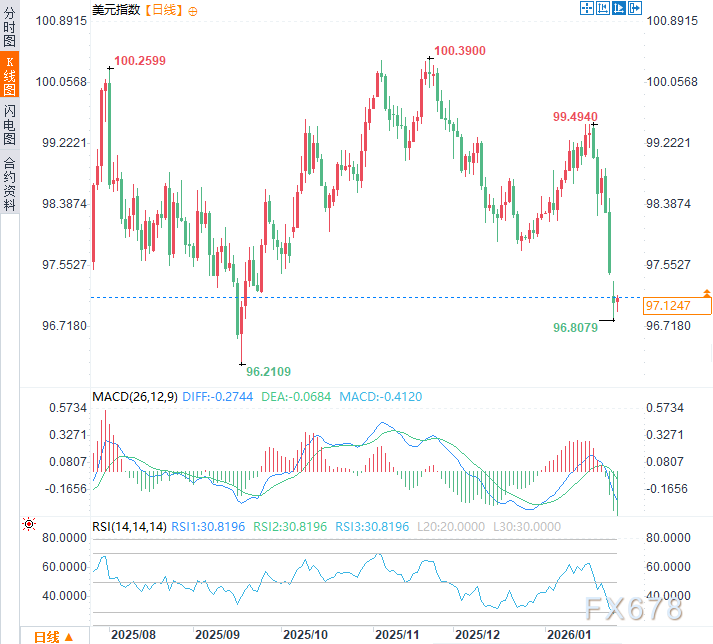
(Dollar index daily chart, source: Internet)
The XM foreign exchange market shows that at 9:50 Beijing time, the US dollar index is currently at 96.07.
Please indicate the source when reprinting: https://www.daoctech.com/fxschool/5252.html
Disclaimer: The content of this article does not represent the views of the Institute of Foreign Exchange. The content is for reference only and does not constitute investment advice. Investors operate accordingly at their own risk.