
Australian Exchange official website: US retail sales growth slows down, initial jobless claims increase! Federal Reserve policy direction and market trends evolve?
On Thursday (January 16), the US December retail sales data and initial jobless claims data were released one after another, which attracted widespread attention in the market. US retail sales rose 0.4% monthly in December, slightly lower than expected, but still showed strong demand in the economy, further strengthening the Federal Reserve's stance of maintaining cautious monetary policy. In addition, the initial jobless claims data also provided the market with important clues about the health of the US labor market. AUSFOREX official websiteAccording to the analysis, despite the increase in jobless claims, the overall trend remains low, indicating the resilience of the U.S. job market.
Immediate market reaction
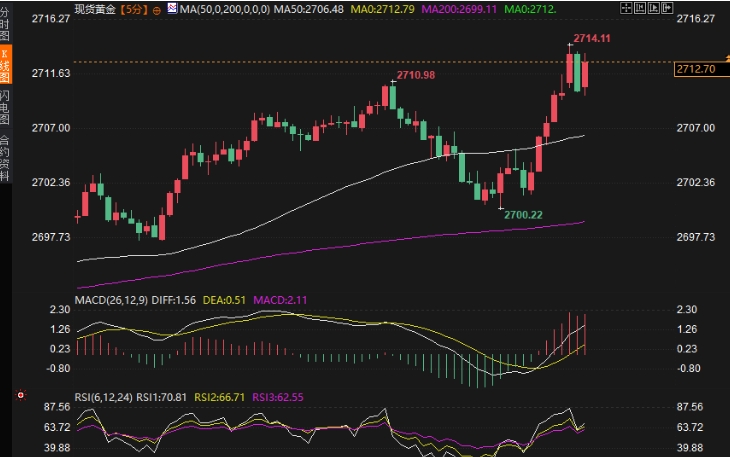
Data showed that retail sales in the United States rose less than market expectations in December, but still performed solidly, causing the dollar index to drop by more than 10 points to 109.33 in the short term. Spot gold prices rose slightly, rising by $4 in the short term to 2711.61 US dollars per ounce. Meanwhile, US stock index futures fluctuated slightly, showing investors' cautious attitude after the data release. US Treasury yields corrected after the data release, with the 10-year Treasury yield rising 2.3 basis points to 4.678%, while the 2-year Treasury yield rose 3.6 basis points to 4.297%. The yield difference between the two widened slightly, reflecting the market's different expectations for future economic growth and the Federal Reserve's policy path.
The economic signals behind retail sales data
The December retail sales figures, which were slightly slower than expected but still reflected strong consumer demand in the economy compared with a revised 0.8 per cent increase the previous month, directly supported the Federal Reserve's decision to maintain its current monetary policy. According to the Commerce Department report, the increase in retail sales in December was mainly driven by core retail sales (excluding automobiles, gasoline, building materials and food services), which rose 0.7%, indicating that consumers have maintained steady spending despite seasonal fluctuations.
Analysts at prominent institutions pointed out that the retail sales data not only reflected the strength of consumer spending, but also showed that the US economy remains resilient. Even in the face of high interest rates, the robustness of the labor market and the improvement of household financial conditions still supported the growth of consumer spending. With the outlook for economic growth remaining stable, analysts generally believe that the Federal Reserve is likely to maintain its expectation of only two interest rate cuts this year, well below the more aggressive expectations for rate cuts in September.
Please indicate the source: https://www.daoctech.com/fxnews/1458.html
Disclaimer: The content of this article does not represent the views of the Institute of Foreign Exchange. The content is for reference only and does not constitute investment advice. Investors operate accordingly at their own risk.