
Dollar Outlook: After the dollar index fell below its 50-day moving average, bearish pressure intensified
On Tuesday (August 12), after the release of the US consumer price index data for July, the market expectations for the Federal Reserve's next policy meeting to cut interest rates increased, and the dollar weakened. The CPI rose 0.2% in July, in line with expectations, and the CPI rose 0.3% in June. On a year-on-year basis, the CPI remained at 2.7%, slightly lower than the consensus expectation of 2.8%. The core CPI excluding food and energy rose 3.1% year-on-year, slightly higher than the expectation of 3%, and rose 0.3% in June.
Weak non-farm payrolls data last week and the tepid inflation data have tipped the market towards a September rate cut. "Underlying inflation remains tame, which gives policy makers room to manoeuvre," said Carl Chamotta of Corpay. Jerome Powell, Fed chairperson, is expected to speak on the policy outlook at the annual meeting in Jackson Hole on August 21.
Yield spreads narrowed, and the euro and yen narrowed against the dollar
The euro reversed early losses and rose 0.06% to $1.16235, while the dollar narrowed its gains against the yen to just 0.17% to 148.390 yen. Chamotta believes that the narrowing of the short-end yield spread is a key driver of the selling pressure on the dollar, which may continue if follow-up data confirm a slowdown in US economic activity.
Sterling rose 0.4% to $1.34805 after UK labour market data showed continued weakness in the labour market but resilient wage growth, a situation that could make the Bank of England cautious about cutting interest rates. The Australian dollar fell 0.3% to $0.64945 after the Reserve Bank of Australia cut interest rates by 25 basis points as expected. ANZ predicted another rate cut in November.
The government bond market is sending out complex signals about interest rate expectations
Yields diverged after the CPI data. The yield on the two-year note fell two basis points to 3.906 per cent, reflecting a bet on short-term interest rate cuts. The yield on the 10-year note rose two basis points to 4.297 per cent and the yield on the 30-year note rose nearly five basis points to 4.887 per cent. Analysts said the data was in line with expectations and did not raise inflation concerns, supporting the Federal Reserve to ease policy without affecting inflation control.
Tariffs and global trade remain risk variables
The news that the United States will maintain high tariffs on Chinese imports for another 90 daysforeign exchange marketWhile the agreed extension has delayed the escalation, core differences remain unresolved.
James Bullard, the former president of the Federal Reserve Bank of St. Louis, joined the market discussions, saying he would be willing to serve as Fed chair if nominated, and stressing the importance of dollar stability and institutional independence.
Market Outlook: If the Federal Reserve releases aggressive easing signals, the dollar index is vulnerable
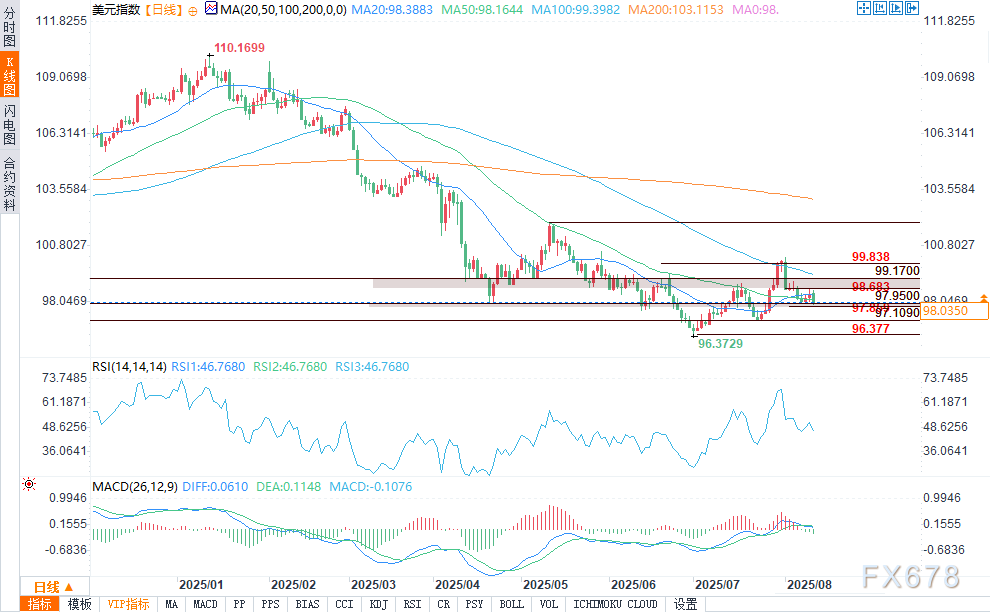
(Dollar index daily chart, source: Internet)
With inflation under control and signs of weakness in the labour market, the Fed has room to cut rates in September. The narrowing of yield spreads and the resilience of major foreign currencies suggest that the dollar index could come under sustained selling pressure towards key support levels if Mr. Powell signals at Jackson Hole that he is prepared to cut rates significantly further.
From a technical standpoint, the dollar index is in a weak position after falling below the 50-day moving average of 98.200, which has become a new resistance level. Today's sell-off makes it possible for the market to break through the Fibonacci support level of 97.859, which could act as a trigger for downside acceleration. The next major target is the low of 97.109 set on July 24.
Please indicate the source: https://daoctech.com/fxnews/1694.html
Disclaimer: The content of this article does not represent the views of the Institute of Foreign Exchange. The content is for reference only and does not constitute investment advice. Investors operate accordingly at their own risk.