
The internal divisions of the Federal Reserve have intensified, and the decision to cut interest rates is facing a test
Expectations of a rate cut by the Federal Reserve, once seen by the market as a certainty next month, have turned into a nearly 50-50 split as officials sharply disagree on the state of the economy's fundamentals and the main risks from persistent inflation and weak hiring performance. This article sorts out the current positions and views of the Federal Reserve members and summarizes the views of relevant institutions.
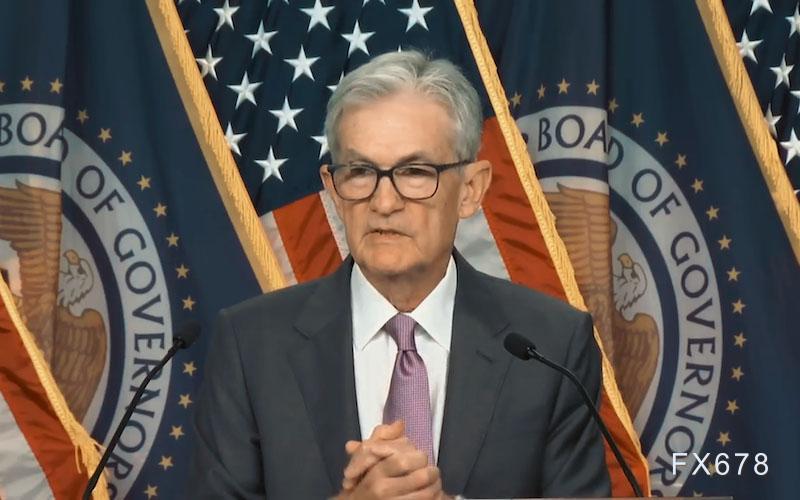
Two opposing camps: inflation stickiness vs weak employment
In public speeches over the past week, concerns about the persistence of inflation have clearly risen among some policymakers - echoing the "cost of living" anxiety that has recently become a hot topic.
At the same time, the other school of thought focuses more on the weakness of the hiring market and the risk that the current "low hiring, low firing" employment pattern could turn into a wave of layoffs.
The disagreement within the Fed's 19-member interest rate-setting committee essentially reflects uncertainty about the economic outlook caused by a combination of factors such as tariffs, technological change, immigration policy adjustments, and tax reform.
Luke Tilly, chief economist at M & T Bank, noted that "there is a lot of uncertainty behind this, and it makes perfect sense that there is such a significant difference of opinion."
The risk of interest rate cuts stranded: high credit costs exacerbate people's livelihood anxiety
If the Federal Reserve scales back its rate cuts, the cost of home and auto loans will continue to be high.
Survey data show that high interest rates on mortgages and car loans are continuing to fuel widespread dissatisfaction with the high cost of living.
Preview of the meeting: FMOC voting has a rare negative vote or a high probability event
A number of Federal Reserve observers have cautioned that there could be an unusual number of dissenting votes, regardless of whether a rate cut is ultimately decided at the December 9-10 meeting.
Krishna Guha, an analyst at EvercoreISI, estimates that there could be as many as four to five votes against a decision to cut interest rates; if interest rates remain unchanged, there could be as many as three votes against.
In the Fed's tradition of seeking consensus on policy, four dissenting votes would constitute a rare occurrence - the last time a group of four officials dissented was in 1992 under Alan Greenspan.
Christopher Waller, the Federal Reserve governor, admitted on Monday that the central bank is often criticised for "groupthink" because most of its decisions are made by unanimous vote.
"Those who accuse us of groupthink, brace yourselves," Mr. Waller said in a speech in London on Monday. "You are about to witness the Fed's worst groupthink in a long time..." suggesting that Fed officials would no longer pursue "superficial consensus" and would instead publicly express their support or opposition based on their judgment of the economic situation.
Data break: government shutdown amplifies decision-making dilemma
The disruption in the release of economic data caused by the government shutdown has further exacerbated this divide - posing a particular challenge to the "data-dependent" Fed that Chairperson Powell has repeatedly emphasized.
The latest employment data released by the government is currently stuck in August, while inflation data has only been updated to September.
The September non-farm payrolls data will be officially released in the near future, and the market expects a limited number of new jobs to be created that month, while the unemployment rate remains relatively low.
Market expectations reverse: the probability of interest rate cuts decreases, triggering a stock market correction
Wall Street investors are pricing in the probability of a December rate cut to around 50 per cent, down sharply from a peak of almost 94 per cent a month ago, according to data from CME Group's Fed Watch Tool - a shift in expectations that has been one of the core drivers of the recent stock market correction.
The current rate cut probability has risen slightly from 42.36% to 48.9%. The market reacts in advance to possible policy changes, with concerns about precious metals andforeign exchange marketMovement,PepperstoneProfessional institutions such as these will also closely monitor the actual market reaction after the release of relevant data.
Policy shift signal: After Powell cools down, officials' camp is divided
After the Federal Reserve cut interest rates for the first time this year in September, policymakers signalled that two more rate cuts were expected to follow.
But after the second cut on October 29, Mr. Powell was cautious about the prospects for further cuts, making clear that the December cut was "not a given".
Expectations of a rate cut were further affected by comments last week from a number of regional Fed officials. Susan Collins, president of the Boston Fed, said: "High prices remain a central concern in all communications with businesses and people in New England."
Ms Collins stressed that keeping the Fed's base rate near its current level would help push inflation back towards target, adding that the economy "remains quite resilient" even at current rates.
A number of regional Fed presidents, including Rafael Bostic of the Atlanta Fed, Alberto Musalem of the St. Louis Fed and Jeffrey Schmid of the Kansas City Fed, echoed similar sentiments.
Mr. Mussalem, Mr. Collins and Mr. Schmid are among the 12 officials to vote on policy this year, with Mr. Schmid having voted against keeping interest rates unchanged at the October meeting.
Mr. Schmid said on Friday that "I continue to hear concerns about the pace of price increases in my conversations with business leaders in my jurisdiction, including the impact of tariffs on input costs, but not just that - rising health care, insurance costs and electricity costs are strong pain points for the public."
However, Waller took the opposite view on Monday, arguing that a weaker hiring market was the more central risk, and reiterated his call for a rate cut in December.
He pointed out that "the labor market remains weak and nearly stagnant, and the September inflation data continue to show relatively limited transmission effects of tariffs, confirming the view that tariffs... are not a persistent driver of inflation."
Mr. Waller countered suggestions by Mr. Schmid and others that "inflation has been above target for many years and interest rates should remain high", stressing that there was no sign that the public had formed expectations that inflation would remain high for a long time, adding that "we cannot simply reject a rate cut on the grounds that'inflation has exceeded the standard for many years', and we must present a more convincing argument against a rate cut."
Consensus breakthrough: Employment data as a key variable
Former Kansas City Federal Reserve President Esther George analyzed that if future new economic data show a net loss of jobs, the Federal Reserve may be able to form a consensus to cut interest rates.
It is worth noting that, although the market had expected a number of negative votes at the September meeting, only the directors appointed that month voted against it, advocating for a deeper rate cut.
"A no vote is a difficult decision and I don't think some of the officials who are publicly dissenting today will necessarily stand their ground in the final vote," Mr. George said. "Whatever the final policy direction, there will be enough consensus at the Fed."
External factors may influence Federal Reserve decision-making
It is reported that discussions are underway with a number of candidates to replace Federal Reserve Chairperson Powell, whose term will officially end in May 2026, which means that the Federal Reserve's policy direction may change significantly in the next six months, and the market has maintained a high level of attention to this trend.
"It's safe to say I'm not going to be chairperson of the Federal Reserve," said Mr. Bescent, the US Treasury secretary, as he met the three candidates.
Institutional perspective:
After the US government restarted, Citigroup judged that weaker labor market data would prompt the Federal Reserve to start cutting interest rates at the December FOMC meeting, which is also a core variable affecting the current stock market.
Despite the recent pullback in equities, expectations of a Fed rate cut, combined with a marginal improvement in market liquidity after the government shutdown, have created a favorable environment for the market - a combination that is expected to reactivate the US equity market and lead to a phase in the end of the year.
Key indicators to be tracked include upcoming labor market data and inflation reports, which have important implications for the direction of the Federal Reserve's policy decisions in December and even market performance at the end of the year.
Judging from the recent pullback of the US dollar index and the rebound in gold prices, the market seems to have partially reflected the decline in the probability of the Federal Reserve cutting interest rates in December. For these changes, Pepperstone and other professional institutions will continue to pay attention and analyze their potential impact on investment strategies.
Dirk Wheeler, global head of macro strategy and asset allocation, and Alex Saunders, global head of quantitative macro strategy, make two arguments that it is too early to be too pessimistic.
One is that the government shutdown has ended, and economic data will return to a normal pace of release, which anticipates that the Federal Reserve will implement interest rate cuts in December; the other is that market liquidity will improve marginally.
At the same time, the US dollar index has begun to correct recently, while gold prices have rebounded, and the market seems to have reacted to the fact that the probability of the Federal Reserve cutting interest rates in December has declined.
Summarize:
The US December interest rate meeting saw a lot of excitement, with the market generally concerned about the increase in layoffs, job losses, and slowing wage growth in the US job market, all of which pointed to the adjustment of the job market.
From the surface, the Federal Reserve will make decisions based on the data, but there are still differences in the interpretation of the data by different members in the past, and the future voting results remain uncertain.
In addition, the interaction between the US government and the Federal Reserve has also increased the uncertainty of the policy outlook.
Affected by the expected change in interest rate cuts, the global equity market has experienced a certain degree of volatility, and the price of gold has only recently begun to strengthen. These trends reflect the advance layout of market funds.
Whether the Federal Reserve will cut interest rates in December will ultimately be based on the objective judgment of the data or the result of other factors, and the market will continue to pay attention.
Please indicate the source: https://www.daoctech.com/fxnews/2636.html
Disclaimer: The content of this article does not represent the views of the Institute of Foreign Exchange. The content is for reference only and does not constitute investment advice. Investors operate accordingly at their own risk.