
The spot crude oil premium has plummeted, and the inventory buffer is about to be exhausted, and a new round of surge is on the way
Recently, the international spot crude oil price has fallen sharply, and the spot premium has narrowed rapidly, from more than 30 US dollars per barrel higher than Brent crude oil in early April to almost parity in the procurement cycle in May, or even a slight discount. This is not the easing of the tight pattern of global crude oil supply, but the refiners wait and see to delay the lock-up of high prices, the release of strategic reserves, the sharp drop in imports from major Asian countries, and the surge in US exports.
Industry institutions have warned that the current low price is only a short window period, the market buffer inventory continues to consume, the Strait of Hormuz navigation has not been broken through, and the high start of refineries in summer is approaching, and spot oil prices will soon usher in a violent rebound.
The sharp drop in spot oil prices is not a real improvement in the supply pattern
The core of this round of weak spot crude oil prices is that global refiners actively adjust the procurement rhythm, unwilling to undertake high-priced cargoes close to $150 per barrel, and generally bet that the situation between the United States and Iran is expected to ease and the Strait of Hormuz will resume traffic as soon as possible, so deliberately postpone centralized procurement. At the same time, the global market has taken multiple measures to hedge the supply gap. Countries continue to release commercial inventories, take the initiative to reduce the operating load of refineries, and superimpose the International Energy Agency to coordinate the release of a record 400 million barrels of global strategic reserves, effectively calming the spot market in the short term.
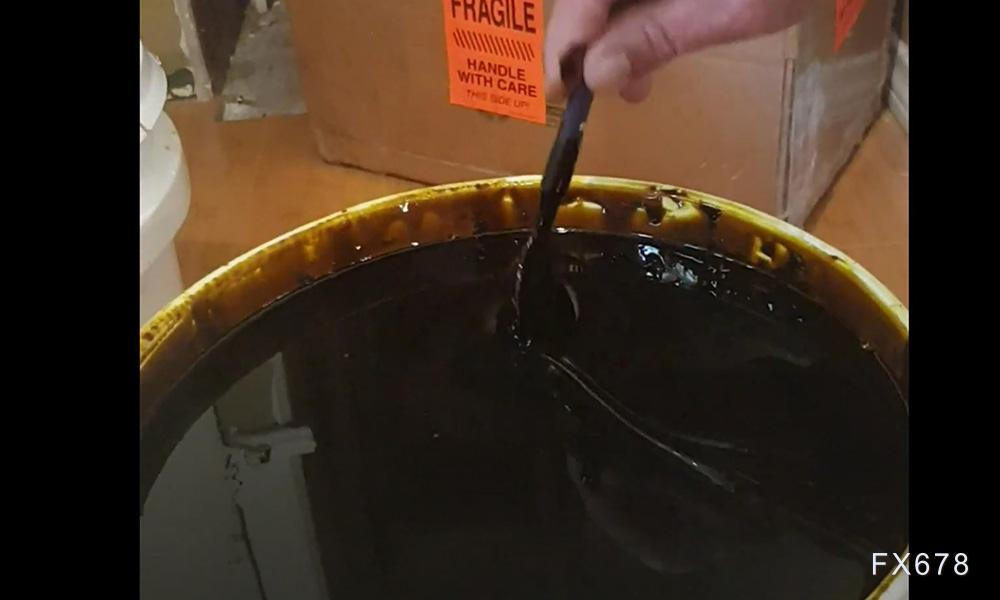
Refineries started spring equipment maintenance ahead of schedule, and some of them were maintained as planned to prepare for the peak oil consumption in summer, further weakening the immediate purchase demand for crude oil. At the same time, US crude oil exports hit a record high, and a large amount of West Texas light crude oil flowed to the Eurasian market, diverting regional supply pressure, which together dragged down spot oil prices in the May purchase window.
Imports from major Asian countries have shrunk sharply, becoming an important buffer in the market
As the world's largest crude oil importer, the Asian country's crude oil imports in April fell sharply by 20% year-on-year, with an average daily import decrease of 2.40 million barrels. The average daily import volume of the month fell to 9.25 million barrels, setting a record low since the epidemic period in July 2022. Affected by the tightening of supply in the Middle East and the surge in oil prices, large oil companies have reduced the processing load of refineries, and even rare resale of crude oil supplies scheduled for May.
David Wech, chief economist at Vitoxa, said that the sharp drop in imports from major Asian countries and the accumulation of onshore inventories against the trend have become an important pillar of market self-balancing in this round of crude oil supply crisis. The combination of multiple factors such as falling demand and active volume control has temporarily relieved the pressure on spot prices, but the industry believes that this ultra-low import state cannot be maintained in the long run.
The buffer inventory continues to thin, and the market is caught in a race against time
At present, the global buffer space formed by inventory release, refinery burden reduction, and demand concession is rapidly shrinking. Morgan Stanley analysis believes that the two major buffer reserves in Asia and the United States, which have suppressed the rise in crude oil futures, are likely to be exhausted before the resumption of navigation in the Strait of Hormuz, and the crude oil market has entered the countdown to passive replenishment.
Neil Crosby, senior crude oil analyst at market intelligence agency Spartan Commodities, said:The current spot oil price does not truly reflect the fundamentals of extremely tight supply and demand. Asian buyers only maintain minimum rigid demand purchases, deliberately restrain high-priced stocking, and further depress the spot premium.At present, the actual price difference has fallen below the average in the past two years, which is seriously different from the actual geopolitical supply risk.
Peace talks are expected to cool down, and oil prices will start to rebound at any time
In the early stage of the market game, the US-Iran peace talks broke through, and buyers generally held the currency to wait and see, unwilling to lock up goods at a high level to bear the risk of price correction. Now that the optimistic expectations of the peace talks are gradually fading, the spot price of pegged Brent crude oil has been significantly underestimated from the perspective of arbitrage. As the high start cycle of refineries in the summer approaches, refiners and traders will eventually focus on replenishment. Once the market confirms that the Strait of Hormuz is difficult to resume navigation in the short term, the actual price difference of Brent crude oil will quickly repair and rebound.
Helima Croft, head of global commodities and Middle East and North Africa research at Royal Bank of Canada Capital Markets, believes that the optimistic news of the market's frequent easing of the situation, although the short-term pressure on the disk price, has delayed the necessary demand contraction adjustment, unable to digest the huge supply gap before the summer peak.
summary
Overall, the current round of spot crude oil prices is the result of the resonance of short-term buffer factors, not the resolution of the Middle East supply impasse. The contraction of imports by major Asian countries, the release of strategic reserves, and the delay in purchases by refineries are only temporary means to support the market, and various inventory buffers are rapidly depleting. As the peak oil season in summer approaches and the dawn of peace talks with the United States and Iran is dim, the window period of low spot crude oil prices is coming to an end, and the fundamentals of supply and demand will eventually dominate the market. A new round of skyrocketing oil prices has gradually approached.
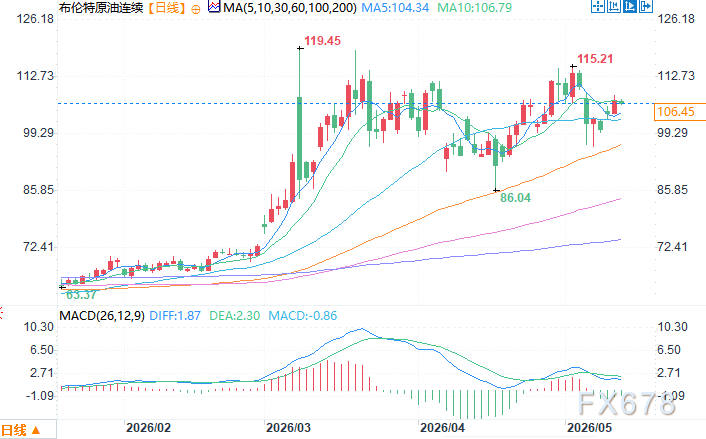
Brent crude oil continuous daily chart, source:DBG Forexnetwork
At 14:49 on May 13, Beijing time, Brent crude oil continued to trade at $106.52 per barrel.
Please indicate the source: https://www.daoctech.com/fxnews/2693.html
Disclaimer: The content of this article does not represent the views of the Institute of Foreign Exchange. The content is for reference only and does not constitute investment advice. Investors operate accordingly at their own risk.