
FXT Investments: The Euro is in Danger
FXTInvesting believes that in some respects, the euro is at its highest level on record.If the eurozone economy starts to suffer and forces the European Central Bank to turn dovish, the euro could fall。
The euro's so-called nominal effective exchange rate, which compares the euro with the currencies of its eurozone trading partners, has never been stronger. It is also near its highest level in three years against the renminbi, which could make exports from the region less attractive amid a series of data suggesting Europe is in recession. Mark Dragten, head of discretionary foreign exchange at Insight Investment, said:The strengthening of the euro is "definitely" a concern for the European Central Bank。
Although the European Central Bank looks at a range of monetary indicators beyond the nominal effective interest rate, the euro's rally is starting to look shaky.
EUR/USDThe exchange rate is near a 17-month high and has risen more than 18 percent since falling below parity with the dollar last September as the European Central Bank embarked on the most aggressive monetary tightening cycle in its history.EUR/JPYThe exchange rate against the pound also rose sharply.

Technical signals suggest that the euro is overbought. The euro's nine-week relative strength index has turned bearish, while the Commodity Channel index, which measures current prices relative to historical levels, has started to decline, indicating future losses.Brad Bechtel, strategist at Jefferies LLC, said: "The euro is no longer attractive in this position, and it knows that."
If European Central Bank President Christine Lagarde eases her aggressive anti-inflation rhetoric at Thursday's meeting, the euro could fall behind the pound.An unexpected slowdown in UK price growth last week has choked the pound's gains.
According to Bechtel,"The euro and sterling are a bit'out of control 'relative to reality"He expects the euro to fall back to around 1.1080 against the dollar from around 1.1114 on Friday. Analysts surveyed by Bloomberg predict that the euro will fall to 1.10 against the dollar by September and rise to 1.12 by the end of the yearVassilis Karamanis, a foreign exchange strategist at Bloomberg, said:
"On a spread basis, the euro should be below 1.10 against the dollar. The euro rose to a 17-month high on the back of options demand, but its macro backdrop was largely unchanged. Once again, the market clearly overreacted to talk of the end of the Fed tightening cycle, and the euro needs a new catalyst to resume its uptrend."
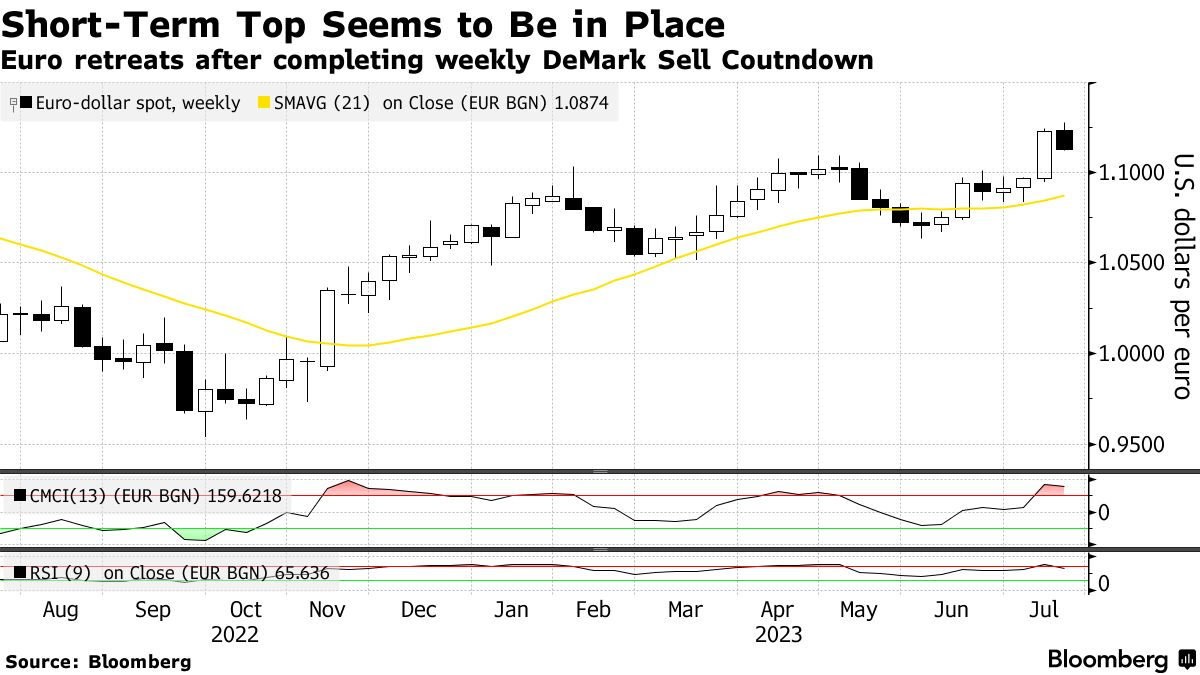
John Hardy, head of foreign exchange strategy at Saxo Bank, said:This week the ECB is likely to emphasise currency strength, "possibly concerned about currency issues and recognising this as a risk to growth".
The European Central Bank is widely expected to raise interest rates by 25 basis points to 3.75 per cent on Thursday and investors will be scrutinising Ms Lagarde's comments for clues as to whether another rate rise is possible in September. Recent economic data from the eurozone has fallen short of expectations, leading to a drop in Citi's Economic Surprise Index, which measures data surprises relative to market expectations. It has diverged from its US counterpart over the past two months.
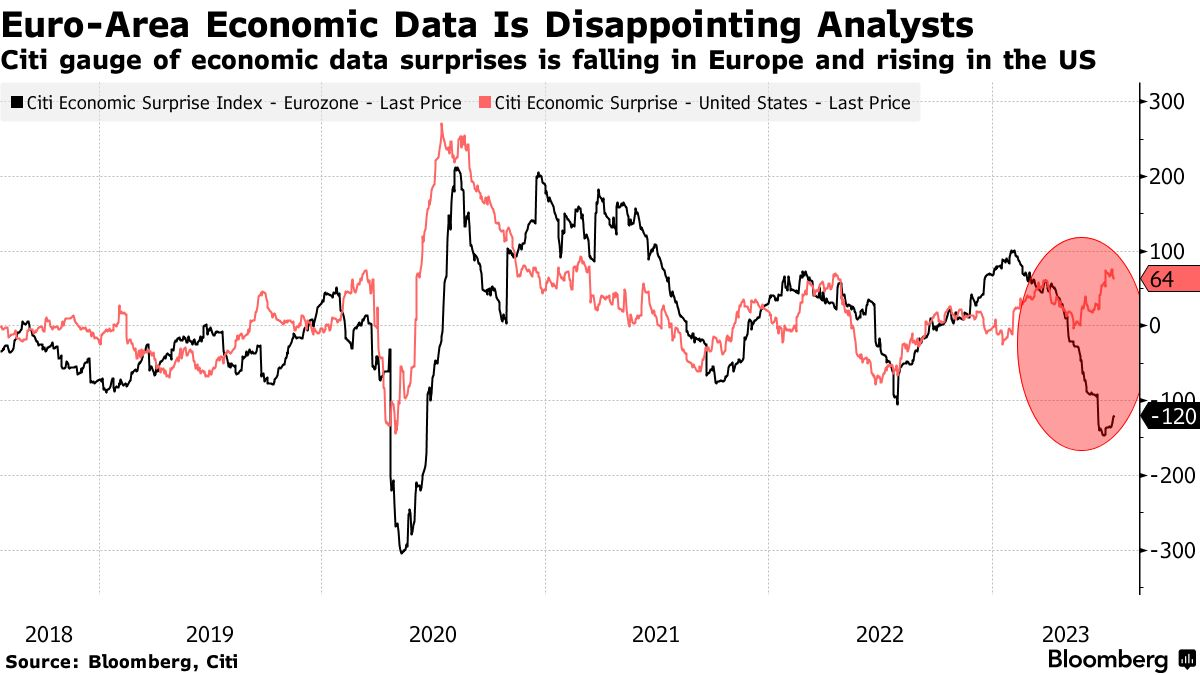
A slew of economic data to be released this week will help policymakers chart their next steps, including PMI data for France, Germany and the eurozone on Monday, which are widely expected to slow. Growth is expected to slow from a year earlier ahead of the release of Germany's widely followed IFO Expectations Index on Tuesday and France's second-quarter GDP report on Friday. "The biggest test will be growth", said Kit Juckes, chief foreign exchange strategist at Socie ́ te ́ Ge ́ ne ́ rale."The European economy needs to show more resilience."
Please indicate the source: https://www.daoctech.com/fxnews/478.html
Disclaimer: The content of this article does not represent the views of the Institute of Foreign Exchange. The content is for reference only and does not constitute investment advice. Investors operate accordingly at their own risk.