
FX: The Federal Reserve's decision is coming! The market focuses on the attitude of the eagle and the dove, and is wary of the strong dollar suppression
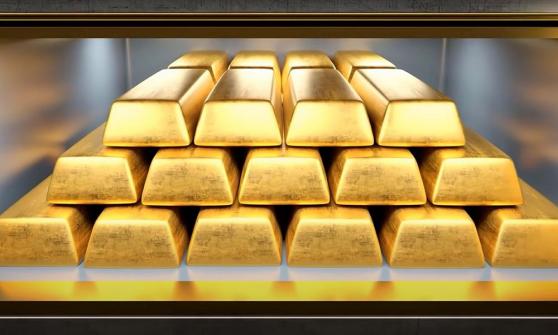
On Wednesday (July 26), spot gold fluctuated narrowly during the Asian session, currently trading around $1963.42/ounce. The market is generally waiting for the Federal Reserve's interest rate decision at 2:00 am Beijing time on Thursday, and the market is more wait-and-see. In addition, Thursday and Friday will also usher in the European Central Bank's interest rate decision and the Bank of Japan's interest rate decision.
Markets expect both the Federal Reserve and the European Central Bank to raise interest rates by 25 basis points, but investors will wait for policymakers, especially Federal Reserve Chairperson Jerome Powell, to provide clues on the outlook for interest rates.
"Gold is expected to trade in a range until the Fed's decision is announced," said Edward Moya, senior market analyst at OANDA. "But there is optimism here that the Fed is almost done raising interest rates, which will support the market."
Tuesday's data showed that the US consumer confidence index rose to a new two-year high in July, which further reduced the possibility of the Federal Reserve sending a dovish signal. US bond yields rose to a nearly two-week high, and the US dollar index also stayed near a nearly two-week high. This put pressure on gold prices. If Powell falls short of the expected dovish in the evening, it may cause gold prices to face certain downside risks. But the market is still looking forward to the end of the Fed's interest rate hike cycle, and geopolitical tensions still provide safe-haven support for gold prices.
In view of the fact that the second-quarter GDP of the United States, the June durable goods orders of the United States, and the changes in the number of initial jobless claims in the United States will also be released on Thursday, and the June PCE data of the United States will also be released on Friday, which may also increase investors' wait-and-see sentiment, thereby affecting the trading space of gold prices. The possibility of wide fluctuations in gold prices this trading day is also relatively large.
The U.S. consumer confidence index rose to a two-year high in July, and house prices continued to rise in May
In the context of continued labor market tensions and falling inflation, the U.S. consumer confidence index rose to a two-year high in July, which boosted the short-term economic outlook.But the economy is not out of the woods, and surveys by the Conference Board on Tuesday provided mixed signals. Consumers remain concerned about a recession next year after the Federal Reserve raised interest rates sharply.
While the share of consumers planning to buy cars and homes has risen over the next six months, the share of consumers planning to buy big-ticket appliances such as refrigerators and washing machines has declined. Consumers also continue to say they intend to spend less on discretionary services, including travel, entertainment and gambling.
However, they are expected to spend more on essential services such as healthcare and cheaper services such as home streaming, bolstering economists' view that consumer spending is levelling off after growing at the fastest pace in two years in Quarter 1.
Nonetheless, the survey, along with data on inflation, the housing market and retail sales, boosted optimism that the economy could avoid a recession.
Robert Frick, a corporate economist at the Navy Federal Credit Union, said that "lower inflation is responsible for the surge in confidence, but Americans have become cautious about cutting spending and saving more, perhaps in preparation for a recession."
The World Business Research Institute's consumer confidence index rose to 117 in July from 110.1 in June, the highest since July 2021.Economists had expected the index to rise to 111.8. The increase in confidence is similar to the results of the University of Michigan's confidence survey.
"Consumers of all ages, from those earning less than $50,000 to those earning more than $100,000, have seen a marked increase in confidence," said Dana Peterson, chief economist at WBR.
Consumer perceptions of the likelihood of a recession in the coming year have risen, but remain below the peak at the start of the year. About 70.6% of consumers said a recession was "somewhat" or "very likely" this month, up from 69.9% in June. Consumers' 12-month inflation expectations fell to 5.7% from 5.8% the previous month, the lowest since November 2020.
A separate report from the Federal Housing Finance Agency (FHFA) on Tuesday showed that home prices rose 0.7% month-on-month in May, the same as the increase in April. Home prices rose 2.8% in the 12 months to May, compared with a 3.1% increase in April.
Lisa Sturtevant, chief economist at Bright MLS, said: "Low inventories and the unexpected resilience of housing demand have kept prices stable or rising in many markets. But affordability will peak in many places as more inventories start coming into the market later this year. So the'bottoming out 'of house prices is likely to be only the first half of the'W-shaped' pattern in the market."
Treasury yields are higher, and the market believes that the Federal Reserve is more likely to raise interest rates twice this year
Treasury yields rose on Tuesday as a stable economy and generally positive data reduced the likelihood of a recession and raised the likelihood of two more rate hikes this year.
The Federal Reserve is widely expected to raise interest rates by 25 basis points on Wednesday, with a target range of 5.25% -5.50%. The U.S. interest rate futures market believes that Wednesday's rate hike may be the last time this year, and the Federal Reserve will remain on hold until May 2024.
But according to CME's FedWatch, the likelihood of another rate hike in November has risen to about 33% from about 26% a week ago.
"The Fed is going to be a little more hawkish than expected, which makes people more nervous," said Ellis Phifer, managing director of fixed income capital markets at Raymond James. "I think there should be more than one rate hike because you need to look at the performance of the data. But the Fed is ready to pause. I don't think they will do the opposite unless things reverse. It should be one [rate hike] and then they will sit still."
Tuesday's data provided further evidence that the economy has not been completely derailed during the most aggressive tightening cycle since the 1980s.
"We still expect a recession," said Stan Shipley, managing director and macro research analyst at Evercore ISI in New York. "But I think the market's recession expectations have fallen from 65-70 per cent to below 50 per cent."
The yield on the 10-year government bond reached a high of 3.922% in intraday trading on Tuesday, the highest since July 12, and closed up 1.5% to close at 3.915%. The Asian market fell slightly on Wednesday, as of 10:00, and is currently trading around 3.897%.
The dollar remains at a near two-week high as markets await clues about the outlook for major central banks' monetary policy
The dollar rallied and retreated against a basket of major currencies on Tuesday, and investors hope that the three central bank meetings held this week will provide guidance on the outlook for monetary policy. On Wednesday in Asia, as of 10:00, the dollar index rose slightly and is currently trading around 101.41, slightly below the nearly two-week high of 101.65 set on Tuesday. Signs of extreme resilience in the U.S. economy continue to support the dollar, and continued weakness in the European economy also helps the dollar.
Edward Moya, senior market analyst at Oanda, said: "The market generally expects the market to consolidate before the Fed meeting, and in most cases the risk appetite has been there. What we are likely to see is,foreign exchange marketIt will have to wait and see. The market could be volatile right after the Fed meeting, but then we have to keep a close watch on the movements of the European Central Bank and the Bank of Japan. So I think volatility in the foreign exchange market will remain high, which is why we don't see a large position correction on a day like today. "
Jane Foley, head of FX strategy at Rabobank in London, said: "The market has wavered over the past week or so on the outcome of the September meetings of the Federal Reserve and the European Central Bank, and investors will seek some clear clues from policymakers this week - although it cannot be assumed that they will provide such clues."
The IMF slightly raised its forecast for global economic growth this year, but warned that continued challenges were weighing on the medium-term outlook
The international monetary fund (IMF) on Tuesday slightly raised its forecast for global growth in 2023, citing resilient economic activity in Quarter 1.But the organization warns that persistent challenges are dampening the medium-term outlook.
In its latest World Economic Outlook, the IMF said inflation was falling and severe stress in the banking sector had subsided, but the balance of risks to the global economy remained tilted to the downside, with credit tightening.
The global lender said it now expects global real gross domestic product (GDP) growth of 3.0 percent in 2023, up 0.2 percentage points from its April forecast, but its outlook for 2024 remains unchanged at 3.0 percent.
From a historical perspective, the growth forecast for 2023-2024 remains weak, well below the 3.8% average annual growth rate for 2000-2019, mainly due to weakness in manufacturing in advanced economies, and is likely to remain at this level for several years.
"We are on track, but we are not out of the woods yet," Pierre-Olivier Gourinchas, the IMF's chief economist, said in an interview with Reuters, noting that the upward revision was largely driven by data from Quarter 1. "When we look five years from now, we expect real economic growth to be close to 3.0 percent, maybe a little bit higher than 3.0 percent. A significant slowdown compared to before the COVID-19 pandemic."
The IMF said the outlook for emerging market and developing economies was "broadly stable" in 2023-2024, with growth expected to be 4.0 per cent in 2023 and 4.1 per cent in 2024, but noted that credit supply was tight and debt distress was likely to spread to more economies.
The IMF pointed out that the current global situation has improved, and the World Health Organization has decided to end the global public health emergency of the COVID-19 pandemic.
"But impediments to growth in 2022 remain," the IMF said, citing, for example, still-high inflation eroding household purchasing power, rising interest rates raising borrowing costs and tight banking conditions in March leading to a credit crunch.
International trade and manufacturing demand and production indicators all point to further economic weakness, "the IMF said, noting that advanced economies, particularly the US, were losing the extra savings they had accumulated during the epidemic, implying" weaker buffers against shocks "
The IMF said that while immediate concerns about the health of the banking sector had subsided, turmoil in the financial sector could return as markets adjust to further tightening by central banks.
The IMF forecasts that global headline inflation will fall from 8.7% in 2022 to 6.8% in 2023 and 5.2% in 2024, but core inflation will decline more slowly, from 6.5% in 2022 to 6.0% in 2023 and 4.7% in 2024.
Gulansha pointed out that it may not be until the end of 2024 or early 2025 that inflation will fall to the central bank's target and the current monetary tightening cycle will end.
The IMF has warned that inflation could rise if fighting in Ukraine intensifies, citing concerns about Russia pulling out of its Black Sea grain programme, or if El Nin ̃ o weather leads to more extreme temperatures pushing up commodity prices, which in turn could trigger further interest rate rises.
The international monetary fund (IMF) estimated that Russia's withdrawal from a deal allowing Ukraine to export grains through the Black Sea could raise global grain prices by 10-15 percent, but said it was continuing to assess the situation.
The IMF said that global trade growth is declining, falling to just 2.0% in 2023 and rising to 3.7% in 2024, but these are well below the 5.2% in 2022.
The IMF has raised its economic outlook for the world's largest economy, the United States, which is expected to grow by 1.8% in 2023, compared with an April estimate of 1.6%, as the labor market remains strong.
The Kremlin says it is currently impossible to resume the Black Sea grain export deal
The Kremlin said on Tuesday that it was impossible for Russia to revive the Black Sea grain export deal for the time being because parts of the agreement with Russian interests "have not been implemented".
But Kremlin spokesperson Dmitry Peskov told reporters that President Putin had made it clear that the deal could be revived if the Russia-focused parts of the agreement were fulfilled.
The agreement, brokered by the United Nations and Turkey last July, is designed to resume grain exports that were disrupted by the conflict in Ukraine and help prevent a global food crisis.
Peskov said it would be important for Russia to discuss food supplies with African countries at the Russia-Africa summit later this week.
The Federal Reserve's resolution forward: the economy remains strong, and the Federal Reserve may not be happy about the inflation situation
As the Federal Reserve prepares to raise interest rates again this week, policymakers face a choice about how much weight to give to recent economic data that make it more likely that they will get the desired results on inflation and unemployment, but also raise the risk that the economy will be too strong to maintain price stability.
Inflation has slowed more than expected since the Fed's June policy meeting, moving towards the central bank's 2 per cent target. Many analysts believe the cycle of slowing price rises is underway and should continue, without further increases after the widely expected 25 basis point rate rise on Wednesday.
But optimism about the Fed's orchestrated "soft landing" - a situation in which inflation falls, unemployment remains relatively low, and the economy avoids recession - has also buoyed financial marekts, but this could hamper the central bank's goal.Although the data suggest that inflation is slowing, policymakers may prevent the market from becoming too optimistic by sending a still-strong anti-inflation message.
The Fed "does not want to be blinded by the recent deceleration in inflation and prematurely declare victory," Diane Swonk, chief economist at KPMG, wrote on Monday, concluding that the Fed would keep its options open for further increases in borrowing costs. "Financial marekt has been ahead of the Fed... This has eased credit conditions and may stimulate faster growth."
The rate-setting FOMC is expected to raise its target range for the benchmark overnight rate to 5.25-5.50 per cent in its latest policy statement to be released at 2:00 am Beijing time on Thursday. Federal Reserve Chairperson Jerome Powell will then hold a press conference to detail his interest rate decision.
In the six weeks since their June 13-14 meeting, Fed policymakers have digested data reflecting a similar situation to the one they faced a year ago, when six months of contraction in economic activity suggested a recession was under way, prices were rising rapidly, and central bankers had accelerated rate hikes to the point where they expected to make any downturn worse.
The question now is to acknowledge how much progress has been made. The mood at the Fed's meetings last summer was one of deep concern about inflation soaring to a 40-year high and uncertainty about the fate of the economy as the central bank tries to tame it. Unemployment has barely budged since then, at 3.6 percent, and growth has been consistently above trend, but the Fed's preferred measure of inflation has still fallen from 7 percent in June 2022 to 3.8 percent in May.
This is still nearly double the central bank's 2% target, and some officials are concerned that if the economy remains as resilient as it currently appears, it will become increasingly difficult to complete the remaining work required to meet the target.
To be sure, there are already signs of an economic slowdown, and some policymakers expect further economic weakness, which is a reason to be cautious when considering further rate hikes.
But as of June, monthly job growth was still higher than 200,000, and wage growth outpaced inflation, so households may be able to maintain their spending power, but some Fed officials believe consumption needs to slow down to hold down excessive inflation.
US equities have been rising and other indicators of financial conditions suggest that some are easing despite the Federal Reserve's attempts to rein in economic growth. Indeed, a new central bank financial conditions index suggests that tightening may have peaked late last year.
In the second quarter, the Atlanta Fed's "nowcast" for economic growth over the three months has risen sharply from 1.7% quarter-on-quarter to 2.4%, due to stronger consumer spending and business investment, as well as a larger contribution from government spending.
The shift crosses an important line, from trend growth of 1.8 per cent, which is slightly below the Fed's expectations - a level that should continue to keep inflation in check - to much higher.Preliminary figures for second-quarter gross domestic product (GDP) will be released on Thursday, and economists expect an annualized rate of 1.8% in the second quarter, compared with 2.0% in Quarter 1.
However, unless economic activity cools sharply soon, it could mean that Fed officials are underestimating the strength of the economy and could cast doubt on the prospect of a sustained decline in inflation.
Tim Duy, chief U.S. economist at SGH Macro Advisors, wrote that Federal Reserve officials, who in June predicted that GDP would grow by just 1.0 percent in 2023, "essentially called for an abrupt halt in the second half of the year. But we already know enough about the third quarter to know that won't happen."
For now, that could open the door to further rate hikes. Fed officials were caught off guard in 2021, when their initial analysis of rising inflation attributed it to factors such as supply shocks and spending in times of pandemics, which they thought would fade away over time. Even now, two years later, that appears to be happening, but they may not be winning anytime soon.
With the focus likely to shift to growth in the real economy and price data, Mr. Duy said, "it's not clear how fast the Fed will tolerate growth during a period of softening inflation data."
"We believe Powell will explain that in order for the Fed to have confidence in restoring price stability, it needs to see further cooling in demand, manifested in a significant slowdown in GDP growth, weaker employment growth and further downward pressure on wage growth, leading market participants to broaden their focus beyond the inflation data."
FXTThe FX indicates there will be three scenarios: 1. Powell will hint at further rate hikes, but not imminent. Such a balance would mean another pause in September followed by a final rate hike in November, a scenario with a high probability; 2. There will be consecutive rate hikes. A return to a route of rate hikes at every meeting would be hawkish, with a medium probability; 3. Wait and see. The odds of such a dove are low. While Powell may prefer to end the tightening cycle at current levels, the committee is filled with hawks. Falling inflation and concerns about global economic growth make it highly unlikely that Powell will signal that the bar for further rate hikes is already high.
Overall, although geopolitical concerns, economic recession concerns, and expectations that the Federal Reserve is approaching the end of the interest rate hike cycle still provide support for gold prices, the recent data performance in the United States has generally been stronger than market expectations and relatively optimistic. The possibility that the Federal Reserve will be particularly dovish at this meeting has decreased. This is expected to continue to support the trend of the dollar and US bond yields, and put pressure on the price of gold. It is necessary to guard against the possibility that the price of gold will fall below the support near 1950. Of course, if the Federal Reserve is unexpectedly particularly dovish, this will provide an opportunity to reach the 1980 mark or even the 2000 mark.
Please indicate the source: https://www.daoctech.com/fxnews/490.html
Disclaimer: The content of this article does not represent the views of the Institute of Foreign Exchange. The content is for reference only and does not constitute investment advice. Investors operate accordingly at their own risk.