
US stocks are quickly "deleveraging"! Hedge funds increase their short selling efforts
As Wall Street suffered a cross-asset sell-off last week, hedge funds increased their shorting of stocks, a measure of hedge fund market positionsIt recorded the largest decline since the stock market crash in March 2020。
After rising 20% on the excitement of artificial intelligence, U.S. stocks went from retail investors to rules-based systematic tradersThe enthusiasm for US stocks is fading。
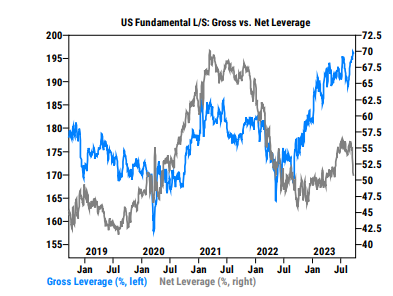
according toIndustrial foreign exchangemainbrokerAccording to the data, fast money investors increased their bearish positions, making theirNet leverage, a measure of risk appetite for long and short positions, fell 4.2% to 50.1%.This is since the deep bear market at the beginning of the COVID-19 pandemicMaximum week-on-week ratio decrease in portfolio leverage。
At the same time,Hedge funds tracked by JPMorgan Chase sell short, whileMorgan Stanley's clients are cutting net leverage at a pace not seen since October。
The Fed's determination to maintain higher interest rates for a longer period of time has put pressure on already stretched market valuations, fueling the recent pessimism. At its July peak, the S & P 500 was trading at 20 times forecast profits, 27 percent above its two-decade average.
Tony Pasquariello, head of hedge funds at Goldman Sachs, wrote in a note: "While I believe in the durability of US economic growth and the peculiarity of US mega-cap tech stocks, at current levels I find it hard to get excited about the'E '[earnings per share] or'PE' [price-to-earnings ratio] next year."
The decrease in net leverage means that the bullish stance of so-called smart money on stocks has weakened.Another measure of a hedge fund's appetite for risk is gross leverage, or the sum of long and short positions. When shorts increase, this indicator can move against the net leverage trend, as is the case now.The increase in total leverage driven by bears means that hedge funds are increasingly inclined to short stocks, and their belief in doing so is very strong.
The S & P 500 has fallen almost 6 per cent from its 2023 high at the end of July and is hovering near three-month lows. For investors watching the 2023 rally begin to lure speculators, this may be welcome news if a return of scepticism can prevent the market from getting too hot. If anything, defensive positions can set the stage for a rally, as happened last October. Timing a rally, however, is no easy task.
A group known for making bold bets, hedge funds used to take advantage of market pullbacks to get up the ante. Net hedge fund sales last week hit their highest level since January 2022, according to Goldman Sachs. At Morgan Stanley, clients stepped up their shorting of expensive tech stocks, consumer retail stocks and artificial intelligence beneficiaries.
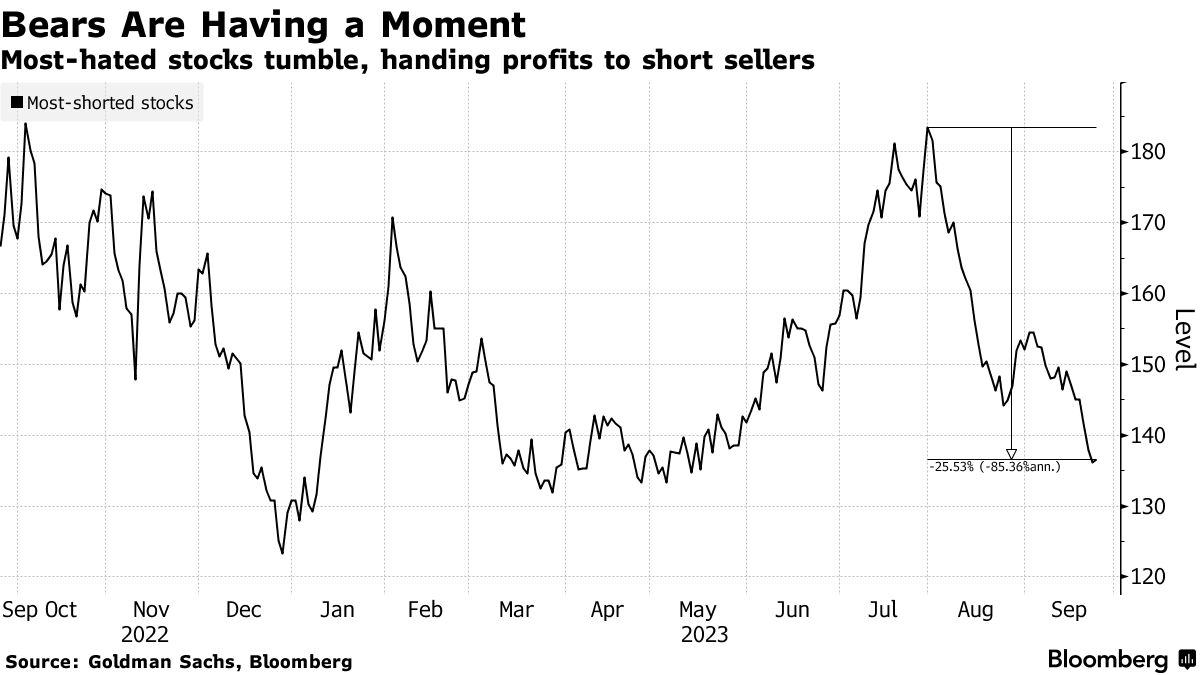
This month, a basket of Goldman Sachs' most-sold stocks fell by more than 10%, making the bears handsomely profitable. The Morgan Stanley team, which includes Christopher Metli, wrote in a note: "Bear holdings are concentrated in sectors that have already been shortedPosition is also a clear driver of price action "
However, JPMorgan's analysis suggests that the overall performance of the bears has not been as strong as during the turbulent August period. At this point last month, the group's monthly returns were flat while the market fell sharply. Now, in a slump of similar magnitude, their holdings fell 1.8% in September. The team, which includes John Schlegel, believes this is largely because their long positions have failed to generate above-market returns.
"The risk is that this could reverse, putting more pressure on results, selling long if the market continues to weaken, and covering short if the market rebounds quickly," they wrote. "The best environment may be for the market to remain range-bound and the macro backdrop seems supportive, but not too hot."
Please indicate the source: https://www.daoctech.com/fxnews/836.html
Disclaimer: The content of this article does not represent the views of the Institute of Foreign Exchange. The content is for reference only and does not constitute investment advice. Investors operate accordingly at their own risk.