
Saxo Bank: Gold and silver will usher in a "Santa Claus market", with gold returning an average of 4% in December over the past 6 years
On Wednesday (November 22), Ole Hansen, head of commodity strategy at Saxo Bank, said that the end of interest rate hikes would mean a decline in bond yields and the dollar, which would drive gold and mining stocks higher in 2024.
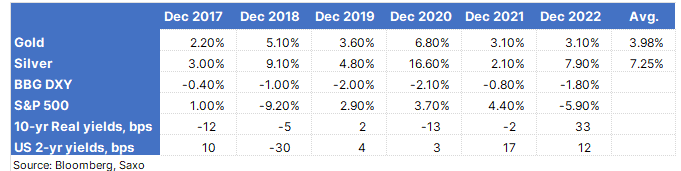
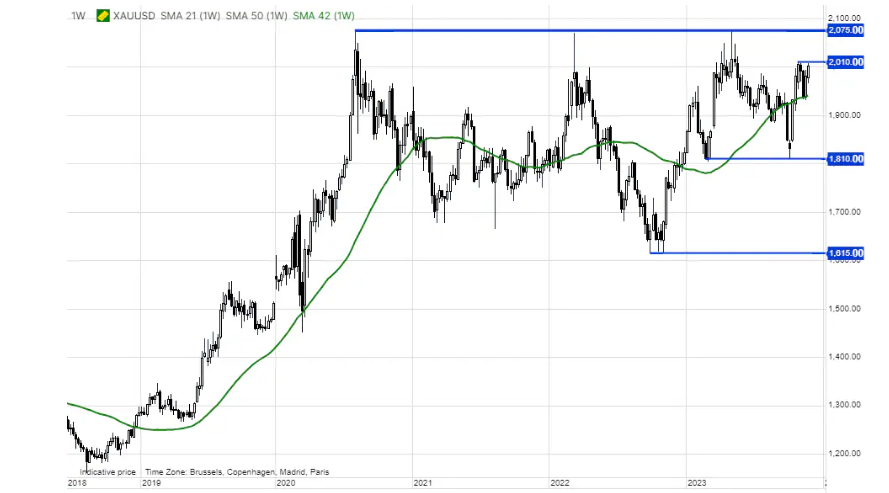
"Gold once again challenged the key resistance level above $2,000, with a breakout likely to end the year strong again, as gold and silver have seen over the past six years, when the'Santa Claus' rally in December gave gold an average return of 4% and silver 7.25%," he wrote. "Both metals have been booming over the past month as speculation has mounted that the Federal Reserve has reached the end of its path to an aggressive rate hike regime, with a possible reversal next year, with across-the-board rate cuts now expected next year. The swap market could cut rates for the first time by 25 basis points by June at the latest."
Hansen said that recent economic data from the United States and other economies have strengthened his view that interest rate hikes have been completed, and the market is now focused on the timing and pace of upcoming rate cuts.
"However, we also recognise that central bankers cannot publicly express this [rate cut] view as they could boost risk sentiment and lead to a premature easing of financial conditions," he said. "This dilemma was clearly demonstrated recently when Fed chairperson Jay Powell was forced to walk back his dovish comments after the November 1 FOMC meeting, when Powell strongly hinted that the Fed would no longer raise interest rates."
Hansen pointed out that recent developments have sent long-term Treasury yields sharply lower, with the U.S. dollar index falling to a three-month low, while stocks and other risk assets have rallied.
"Recently, we have also noticed renewed interest in sectors that have been struggling due to rising debt levels and rising debt servicing costs," he said, noting that the renewables sector "has supported demand for metals, such as the recent hit to silver and platinum and underholdings".
"Our gold monitor shows how the recent strong performance has moved gold slightly higher compared to the corresponding but still supportive moves in the dollar and yields, while the cost of arbitrage has started to come down from the slightly lower 12-month Treasury yields," Mr. Hansen said. "We think the risk/reward is increasingly in favour of gold and the best is yet to come, but for that to happen investors need to have a stronger belief in the Fed rate cut to attract new demand from investors, including long-only asset managers."
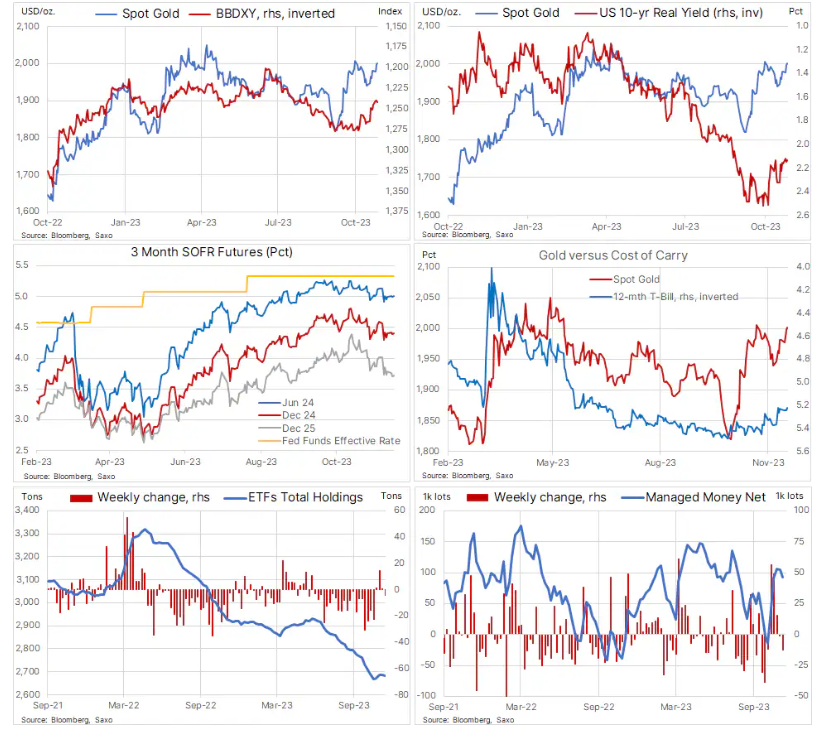
Hansen also pointed out that, despite stabilizing over the past month, total gold ETF holdings will still decrease by 220 tons in 2023, but the strong and stable demand from central banks is preventing weak investment demand from affecting gold prices.
"According to the World Gold Council, central banks bought a record 1,136 tonnes of gold in 2022, plus another 800 tonnes in the first three quarters of 2023, which could set another record this year," he said. "Central bank purchases have essentially set a soft bottom for the gold market, which prevents gold prices from reacting negatively to periods of dollar strength, particularly rising real yields."
Hansen also pointed out that gold prices have rallied strongly in December over the past six years, "performing from 2.2% in 2017 to 6.8% in 2020, while silver has surged 16.6%", which he attributed to the discovery of a Covid-19 vaccine convincing the market that the lockdown is coming to an end.
"While we believe the timing of the first rate hike will be the next major trigger, we could still see a breakout of the $2010 resistance trigger higher FOMO [fear of missed opportunity], which could support the seventh consecutive rise in precious metals in December," he said.
Referring to the much-maligned mining sector, Hansen said he believes mining stocks are still undervalued "in relative and absolute terms". He said the main factors behind the underperformance were "miners' efforts to control labor, fuel and material costs at a time when rising interest rates and inflation increase the overall cost of financing and running a business", as well as "increased environmental, social and governance (ESG) requirements" (ESG) investor scrutiny, rising regulatory costs and government intervention. "
He also said that when traders and investors challenged gold's $2,000 level, "every rally into the region triggered profit-taking in mining stocks."
Hansen believes that mining stocks will return to historic levels relative to gold prices in 2024.
"We see lower funding costs next year and the prospect of a breakout in gold prices as reasons for the mining industry to'catch up '," he said. "We are bullish on miners because they offer 1) gold price leverage, 2) the prospect of higher dividend yields and 3) attractive valuations compared to gold prices."
Please indicate the source: https://www.daoctech.com/fxnews/993.html
Disclaimer: The content of this article does not represent the views of the Institute of Foreign Exchange. The content is for reference only and does not constitute investment advice. Investors operate accordingly at their own risk.