
The hawkish stance of the Federal Reserve superimposed Japan's policy uncertainty, and the dollar rose above the 151 mark against the yen to a new high in April
The dollar rose to above 151.20 against the yen in Asian markets on Friday, setting a new high since the end of March, as the hawkish tone of the Federal Reserve strengthened and Japan's policy uncertainty continued to weigh on the yen.
On Thursday, the Bank of Japan kept interest rates unchanged as expected, but Governor Kazuo Ueda showed caution in his post-meeting speech, emphasizing the need to observe the impact of changes in US tariffs on the Japanese economy, which led the market to reduce expectations for short-term interest rate hikes.
Although the Bank of Japan raised its core CPI forecast for fiscal year 2025 to 2.7% from 2.2% and retained the option to raise interest rates within the year, the overall tone was biased, weighing on the yen.
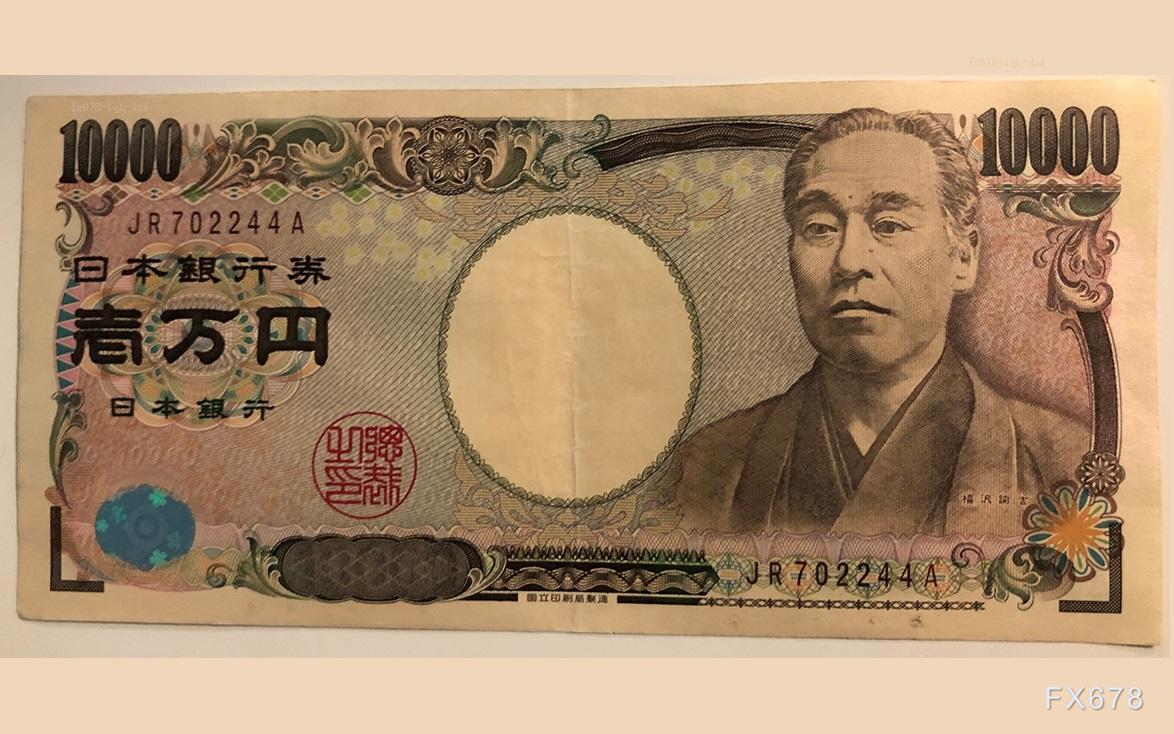
"The lack of a clear policy path from the BoJ and the ruling coalition's defeat in the July 20 election have added to market concerns about Japan's fiscal health," said one currency strategist.
At the same time, the US sent a more hawkish signal. Federal Reserve Chairperson Jerome Powell made it clear on Wednesday that "it is still too early to tell whether to cut interest rates in September", and stressed that the current level of interest rates is not a drag on the economy.
This stance was supported by the latest economic data. US GDP grew at an annualised rate of 3% in the second quarter, higher than expected. In June, the PCE price index rose to 2.6% year-on-year, and the core PCE was 2.8%, also higher than expected 2.7%. Personal income and spending both rose 0.3%, further strengthening the market's continued concerns about inflation.
In this context, the US dollar index continued to strengthen, rising to a more than two-month high this week, continuing to attract safe-haven and arbitrage funds.
US President Donald Trump signed an executive order on Thursday bringing forward tariffs of up to 41 per cent on major trading partners to August 7, a trade policy uncertainty that, while supporting some safe-haven assets, has not been enough to reverse yen weakness.
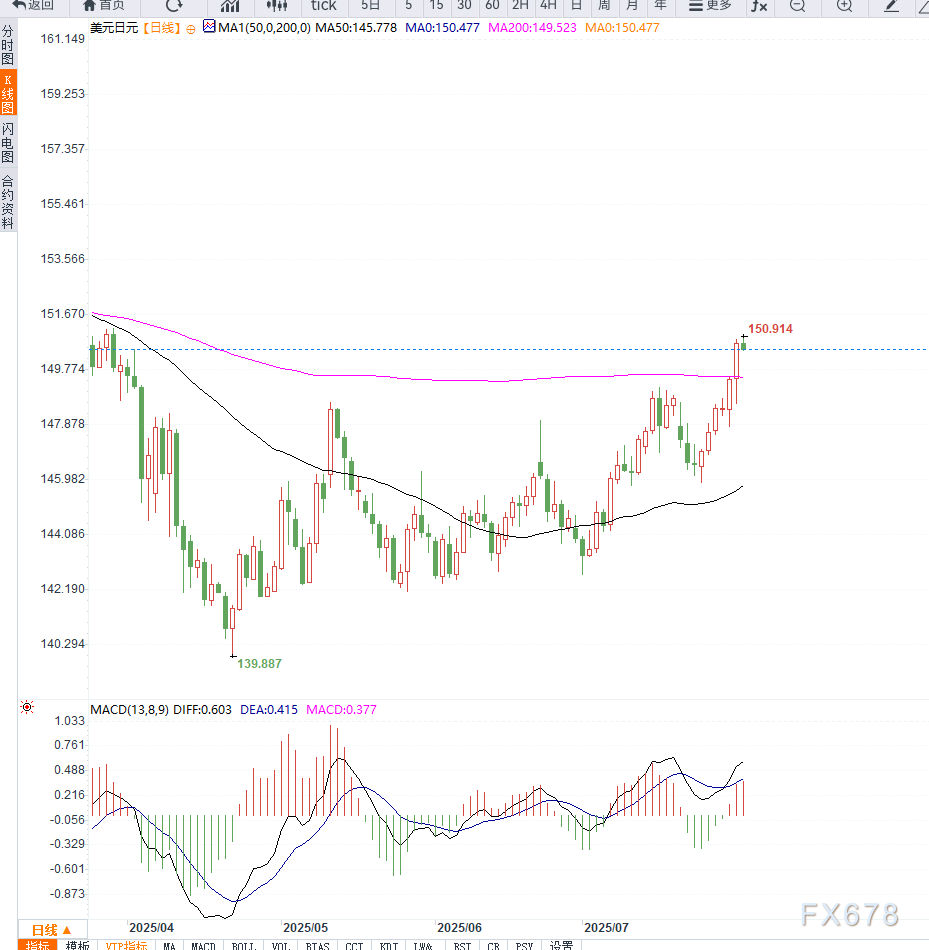
From the daily chart, the USD/JPY exchange rate has accelerated after breaking through the 200-day moving average and the psychological level of 150.00, and is currently approaching the March high of 151.20. The RSI indicator is close to the overbought area, and there may be technical pullback pressure in the short term. But the overall trend structure is still too large, and the pullback may instead constitute a new buying opportunity.
The lower support level focuses on the 150.00 integer mark and the 149.55 area where the 200-day moving average is located. If it effectively breaks through, or triggers a technical sell-off, it will lower the 149.00 mark. However, as long as the price remains above the above support area, the exchange rate is still expected to continue its rise and further test the area above 152.00.
In the short term, the market focus turns to the upcoming US non-farm payrolls data (NFP) in July. The market expects 110,000 new jobs and the unemployment rate to rise slightly to 4.2%. In addition, the US ISM manufacturing PMI data will also be released simultaneously, which may further affect the short-term trend of the US dollar.
Editorial opinion:
The current strong rebound of the dollar against the yen not only benefits from the Fed's policy leadership, but also reflects the double negative of the Bank of Japan's policy rhythm ambiguity and domestic political structural turmoil.
If the US employment data remains solid, the dollar may further open up against the yen, and 152.00 will become the next key test point.
Please indicate the source: https://www.daoctech.com/fxoutrade/1675.html
Disclaimer: The content of this article does not represent the views of the Institute of Foreign Exchange. The content is for reference only and does not constitute investment advice. Investors operate accordingly at their own risk.