
How to manage emotions in trading?
Mastering how to manage emotions in trading is a must for success. Your mental state has a big impact on the decisions you make, especially if you are new to trading, maintaining a calm demeanor is important for stable trading.
In this article, we will explore the importance of day trading psychology for both beginners and more experienced traders, and provide some guidance on how to trade without emotion.
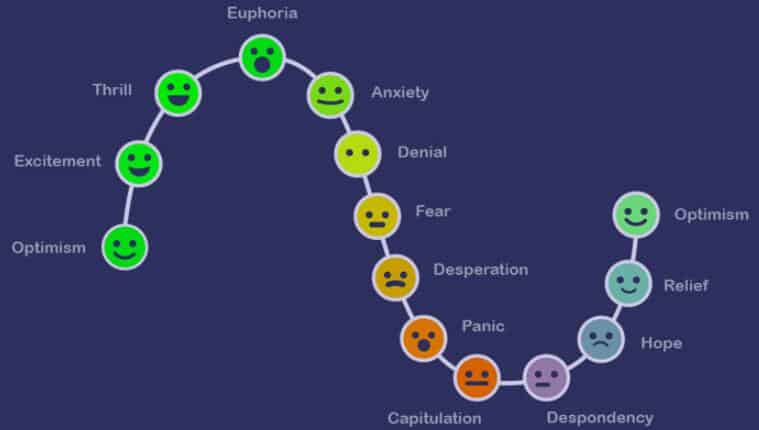
The importance of emotional management
Imagine that you know there will be a non-farm payrolls report today.NFPData release. And you know you should avoid trading on big data releases, but in the end you can't resist gambling, greed and fantasies of getting rich get the better of you, and you end up making a trade before the data is released.
You expect that if the reported figure is higher than the predicted value, the price of EUR/USD will fall rapidly, which will make you a good short-term profit.
The NFP is here, and as you would hope, the number exceeds the forecast. But for some reason, the price is not climbing! At this point you are confused because you think all the analysis and data will prove that the EUR/USD should fall, but the reality is not.
In fact, it's just that you think your analysis is correct. In fact, it's just a result of your impulsiveness, and it has nothing to do with analysis and data.
Professional traders don't want to take risks because a hasty decision can damage their account. It can take a lot of practice and a lot of trading to learn how to minimize emotional trading.
The three most common emotions traders experience
Some of the emotions most commonly experienced by traders include fear, nervousness, certainty, excitement, greed, and overconfidence.
Fear/nervousness
A common cause of fear is trading too big. An inappropriate trade size can unnecessarily amplify volatility and cause you to make mistakes you wouldn't normally make.
Another culprit of fear (or nervousness) is that you make the wrong trades, i.e. trades that don't fit your trading plan.
Confidence/excitement
Confidence and excitement are another key emotion that you will feel in every trade. If you don't have a level of excitement or belief, then there is a good chance that you are not entering the right trade.
By correct trading we mean correct trading according to your trading plan. Even though good trades may fail and bad trades can be profitable, you should allow yourself to win and lose only on good trades.
Greed/overconfidence
If you find yourself only wanting to make trades that you think might make you rich, you might become greedy.
Always check that you are using the correct trading mechanismStop LossGoals, good risk/management, good trading setup). Sloppy trading due to overconfidence can damage your account.
How to manage emotions in trading?
If you want to keep negative emotions out of your trading, planning your approach is key. The old saying that no plan is a plan failure really applies to financial marekt.
As a trader, there is not only one way to profit. There are many strategies and methods that can help traders achieve their goals. However, whatever works, it is often a deterministic and systematic approach; rather than a gut-based approach.
Here are four ways to make it easier to manage your emotions when trading.
Create personal rules
Setting your own trading rules can help you manage your emotions. Your rules may include setting risk/reward tolerances for entering and exiting trades, passing profit targets and/or stops.
Trading under the correct market conditions
It is also prudent to stay away from undesirable market conditions. It is a good idea not to trade when you are not feeling it. Don't expect the market to make you feel better. If you are not willing to trade, the simple solution may be to leave.
Reduce your transaction size
One of the easiest ways to reduce the emotional impact of trading is to reduce your trade size. I'm sure everyone knows this well. For the same amount of principal of 1000, doing 0.1 lot and doing 1 lot of capital changes are completely different. The former has little psychological pressure, while the latter is always worried that they willliquidationThis will seriously affect your trading mood and trading thinking
Therefore, reducing leverage can go a long way towards reducing the risk of such events in the future.
Create a trading plan and transaction log
The results between new traders who use a trading plan and those who don't can be huge. Preparing a trading plan is the first step in resisting trading sentiment.
Please indicate the source: https://www.daoctech.com/fxschool/1086.html
Disclaimer: The content of this article does not represent the views of the Institute of Foreign Exchange. The content is for reference only and does not constitute investment advice. Investors operate accordingly at their own risk.