
Dark hour for the Eurozone! Markets are betting against the euro, betting on a historic crash
The political and economic crisis in France continues to escalate, not only reflecting the fragmentation of French domestic politics, but also raising regional risks due to the fact that the French economy accounts for more than 20% of the euro area. Investors are closely monitoring the results of the vote, which will be an important catalyst for the trend of the euro and the stability of the euro area.
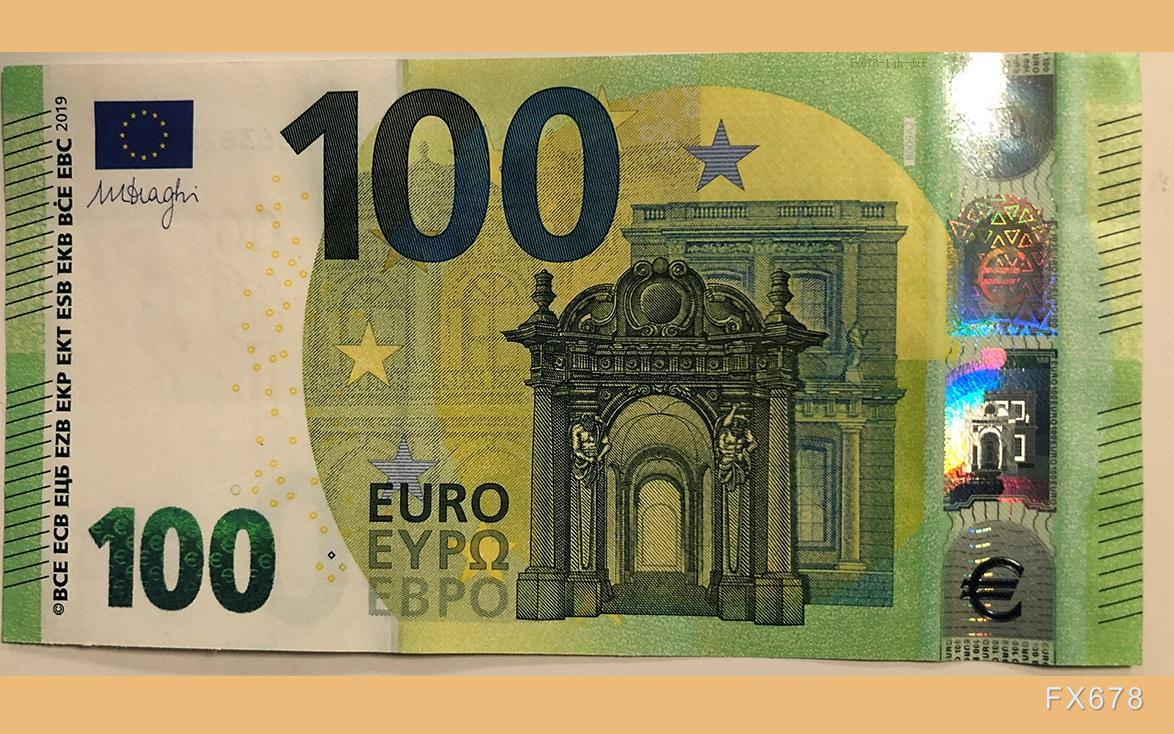
The French political crisis continues to ferment, and the debt quagmire may follow in the footsteps of Italy
Political instability exacerbates fiscal distress
France is facing a growing political and financial crisisFranc ̧ ois Bayrou, the prime minister, will face a confidence vote on September 8 to implement a $51 billion austerity plan. If he fails, he will become the fourth prime minister to step down in a year and a half, highlighting France's political deadlock and vicious circle of debt.
France, once a cornerstone of political stability in Europe, now has a divided parliament: the left opposes cuts to social benefits (which account for 65% of public spending), the center demands more military spending without higher taxes, and the far right advocates spending cuts by restricting immigration and reducing European Union spending.This division makes any fiscal reform difficult。
Blocked reform and market backlash
Macron's tax cuts in 2017 (the abolition of the wealth tax, the housing tax, and the reduction of the corporate tax) attracted foreign investment and reduced the unemployment rate to a multi-decade low of 7%, but caused tax losses of 62 billion euros (2.2% of GDP) annually. Unmatched cuts in the cost of public services, combined with epidemics, energy crises, and social protests (such as the "yellow vest"), caused debt to soar from 2.20 trillion to 3.30 trillion euros.
Macron's success in raising the retirement age to 64 (expected to save 17.70 billion euros in 2030) has been fraught with protests and political wrangling. The deficit rate of 5.5% in 2023 (exceeding the government's forecast), S & P downgraded France's rating. The yield on 10-year French bonds has surpassed Greece and tied with Italy, reflectingMarket concerns have intensified。
Mr. Bayrou's austerity plan, which includes the elimination of two official holidays to boost economic output, has been slammed by the far right as an "attack on French history and people". If the vote fails, Mr. Macron will face the difficult choice of forming a new government or calling early elections. In stark contrast to Italy, where Prime Minister Meloni is on track to become one of the longest-serving postwar leaders after nearly three years in power, France is mired in frequent changes.
France's political fragmentation and debt crisis are intertwined, recreating the difficulties experienced by southern European countriesThe outcome of the September 8 vote will determine whether the country can avoid a full-blown fiscal storm
French political crisis weighs on the euro, debt vortex sparks market concerns
As French Prime Minister François Bayrou faces a confidence vote in parliament on September 8, political uncertainty continues to simmer, analysts have pointed out.The political turmoil in France is becoming a new risk point for the euro。
The political crisis stems from France's deteriorating fiscal position. The country's debt has now reached 3.30 trillion euros, and the budget deficit is expected to reach 5.4% of GDP this year. Investors are concerned by the prospect that France will become the fourth major eurozone economy to change its government in a year and a half if Prime Minister Bayrou's euro-44 billion austerity plan fails.
"The market is repricing French risk, with the yield on 10-year French government bonds recently topping 3.2 per cent and the spread over Italian bonds narrowing to less than 50 basis points, indicating that confidence in the eurozone's second-largest economy is faltering," said FX strategists at UBS.
The movement of the euro has responded clearly to thisIn the past week, the euro has fallen 1.5% against the dollar and 0.8% against the pound. Options market data show that investors are increasing their bearish positions on the euro, and the weekly risk reversal indicator has risen to 1.5 percentage points on the bearish side.
France's current predicament is more systemically risky than that of Italy, where political stability has increased following the debt crisis reforms of the 2010's, and Prime Minister Meloni's government is on track to become one of the longest-serving postwar governments. And France's parliament has been fragmented since last year's election, with any fiscal reform facing a fierce game between the left, the far right, and the center.
"France is a bigger concern because its economy accounts for more than 20 per cent of the eurozone, and if the French debt problem continues to worsen it could trigger a repricing of the entire eurozone bond market," said macro analysts at Deutsche Bank.
Market participants are closely watching the ECB's response, and while central bankers have said they are not yet considering an emergency bond purchase plan, sources said policymakers have raised France's risk exposure in internal discussions.
technical analysis
The technical side of the euro shows that if it breaks through the August high of 1.1742, it is possible to further explore the July high of 1.1829; if it falls below the key support level of the 50-day simple moving average (SMA) (1.1664), it may further explore the recent low of 1.1573.
Investors are advised to keep a close eye on the outcome of the September 8 confidence vote, as well as the possible subsequent political restructuring, which could serve as important catalysts for the euro's next move.
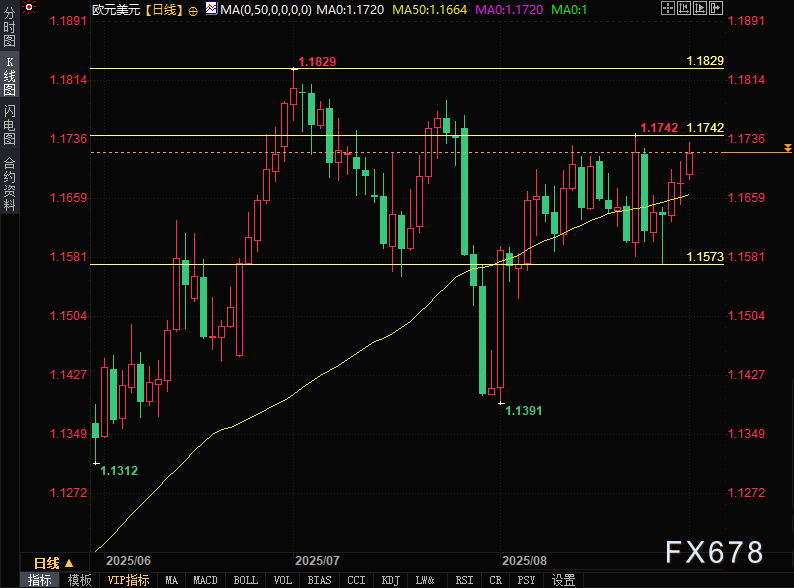
(EUR/USD daily chart, source: Internet)
At 16:19 Beijing time, the euro was trading at 1.1719/20 against the dollar.
Please indicate the source: https://www.daoctech.com/fxschool/1875.html
Disclaimer: The content of this article does not represent the views of the Institute of Foreign Exchange. The content is for reference only and does not constitute investment advice. Investors operate accordingly at their own risk.