
Industrial Investment: Another inflation "good news" tonight? Difficulties may lie ahead!
As inflation continues to decline from its peak,The Federal Reserve's preferred inflation indicator is likely to slow significantly in JuneThe question now is how long this relief will last
The data from FactSet shows that,Societe Generale InvestmentEconomists forecast a 0.2 per cent month-on-month rise in the core personal consumption expenditure price index (PCE) in June, down from 0.3 per cent in May. That would reduce core PCE growth to an annualised 4.2 per cent, down from 4.6 per cent in May.
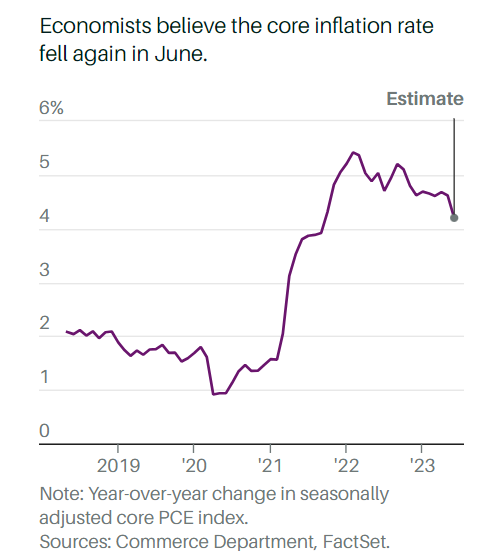
Economists say the expected slowdown in core inflation is mainly due toDue to falling housing costs, lower used car prices, and lower-than-expected airfare pricesGasoline prices (not included in core PCE, but included in overall PCE) also fell last month. As a result, consensus forecasts show overall PCE growth slowing to 3% annualized in June, down from 3.8% in May.
A slowdown in price growth would be good news for the Fed, as it reinforces expectations that disinflation has begun to take hold, but it is too early to tell whether the June data reflect the start of a longer-term trend.
"We just don't know how long this will last," said Diane Swonk, chief economist at KPMG.
Wall Street hopes that another month or two of inflation data showing slowing price growth will prompt the Federal Reserve to stop raising interest rates and raise the chances that the economy will avoid a recession. So far, the progress in inflation has been clear: if core PCE growth slows to an annualized rate of 4.2 percent, it would be the lowest since September 2021 and a sharp drop from the 5.4 percent peak reached in February 2022.
On the other hand, core inflation is still a long way from falling back to the Federal Reserve's 2% target. Economists warn,The PCE, which the Fed prefers to focus on, may find it harder to make further progress in the second half than the CPI.
First, the most significant declines in price growth over the next few months are expected to come from the residential and used car categories. These are the main components of the CPI index, but they account for only about half of the weight in the PCE, meaning the decline in the PCE data is likely to be smaller.
Veronica Clark, economist at Citi, said "so when prices in those categories fall, the drag on PCE will be smaller".
Second, core services excluding housing, which account for a higher share of PCE than CPI, continue to show strong momentum. Healthcare prices in particular are likely to increase this year, while price growth in sectors such as entertainment services will also remain strong. Both will help keep core PCE hot.
"At least in our forecast, core CPI monthly growth is expected to be around 0.2 per cent for three to four months, which looks pretty good," Mr. Clark said. "But core PCE sequential growth is actually more likely to be around 0.3 per cent."
Please indicate the source: https://www.daoctech.com/fxnews/505.html
Disclaimer: The content of this article does not represent the views of the Institute of Foreign Exchange. The content is for reference only and does not constitute investment advice. Investors operate accordingly at their own risk.