
US-Japan tariffs or escalation, Japan's central bank, Federal Reserve, dove eagle war imminent?
On Thursday (August 7), the dollar bottomed out against the yen and rallied. It is now trading around 147.23, down -0.09%. During the session, Federal Reserve officials released dovish guidance and Trump said that a "temporary" candidate would be selected to fill the vacancy of the Federal Reserve board member after Kugler's departure and complete the remaining term. Affected by this, the exchange rate fell to 146.69 during the session, near the week's low of 146.61.
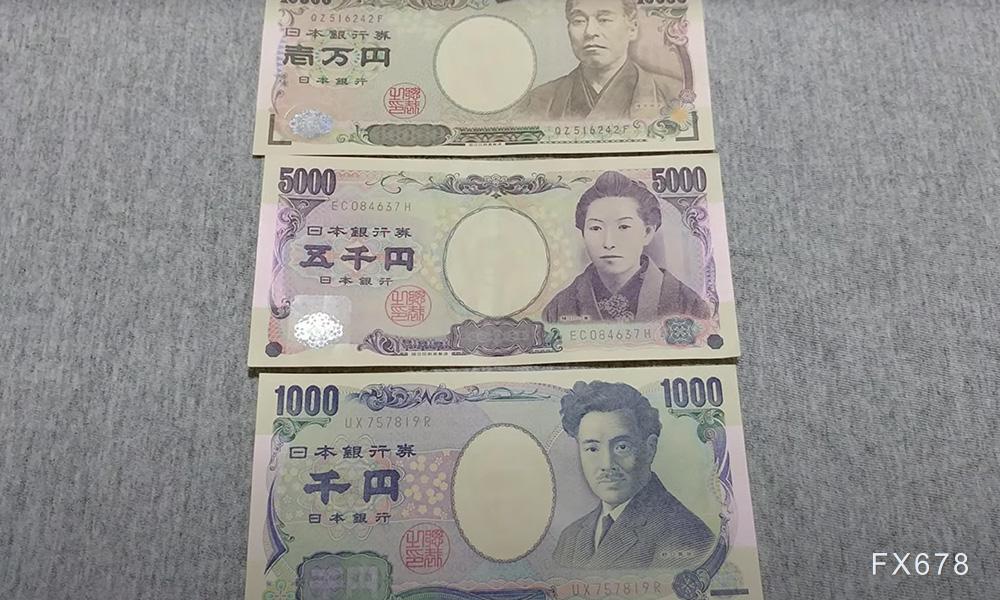
At the same time, on Thursday (August 7), the Asahi Shimbun quoted White House officials as saying that US President Trump may impose an additional 15% reciprocal tariff on all Japanese imports without exemptions for products that already have tariffs exceeding 15%;
The combination of uncertainty about the timing of the BoJ's interest rate rise and generally positive risk sentiment in the market has weakened the attractiveness of the safe-haven yen. This situation also needs to be viewed in the context of Japan's recent political economy.
The ruling Liberal Democratic party's defeat in upper house elections on July 20 and opposition calls for more spending and tax cuts raised concerns about Japan's fiscal health, while data released on Wednesday showed real wages fell for a sixth straight month in June, adding to fears of a consumption-led recovery - all of which hinted at a possible delay in the prospect of a BoJ rate rise, weighing on the yen.
However, the Bank of Japan has repeatedly stated that if economic growth and inflation meet expectations, there is still the possibility of further interest rate hikes before the end of this year, which has deterred yen bears from acting rashly and provided some support for the dollar against the yen.
The flip side of the currency movement came from the dollar's volatility and Federal Reserve policy expectations. The dollar rallied slightly from a more than week low hit on Wednesday, pushing the dollar back above its mid-term level of 147.00 against the yen in the past hour.
But the dollar's rebound space may be limited: the dollar index fell to a one-week low on Wednesday, as the market expects the Federal Reserve to cut interest rates this year more than previously expected; the US non-farm payrolls report in July showed a significant deterioration in labor market conditions, and the US ISM service PMI data released on Tuesday also highlighted the continued drag on the economy from Trump's unstable trade policy, which strengthened the market's expectations for the Fed to resume the interest rate cut cycle in September (expected to cut interest rates at least twice by the end of the year, 25 basis points each time), which in turn weighed on US Treasury yields and the dollar.
The yen is supported by a divergence in the policy outlook between the Bank of Japan and the Federal Reserve, which is widely expected to lower borrowing costs and cut interest rates in September, while the uncertainty over the possibility of a rate hike by the Bank of Japan has not completely subsided. This divergence reminds yen-bearish traders to be cautious and makes it necessary to wait for the momentum of the bears to slowly die before the dollar and the yen show a significant turnaround.
From a technical perspectiveThis week, the US dollar rebounded against the Japanese yen from the 200 moving average (about 146.60 area, that is, the weekly low) in the 4-hour chart and followed up, which was positive for the bulls.
However, the oscillators on the chart have not yet confirmed the bullish outlook, and the price has so far struggled to break through the 38.2% Fibonacci retracement of the July monthly low, so caution is still necessary before the price continues to break through the 147.80-147 area.
If it breaks through this area, the exchange rate may stand on the 148.00 integer mark, further climb to the 148.45-148 area, and even extend to the vicinity of 149.00 (23.6% Fibonacci retracement level); on the contrary, the low of the Asian trading session (about 147.15 area) and the 147.00 mark constitute immediate support, followed by the dense trading area of 146.75 (200SMA and 50% Fibonacci retracement level in the 4-hour chart). If this level is decisively broken, it may open a deeper decline. The exchange rate may accelerate the test below 146.00 (61.8% Fibonacci retracement level), and even touch the psychological level of 145.00.
In the short term, traders will need to focus on weekly US jobless claims data released later in the North American session, as well as remarks from FOMC members - factors that, along with trade-related headlines, will combine to influence the short-term movement of the dollar against the yen.
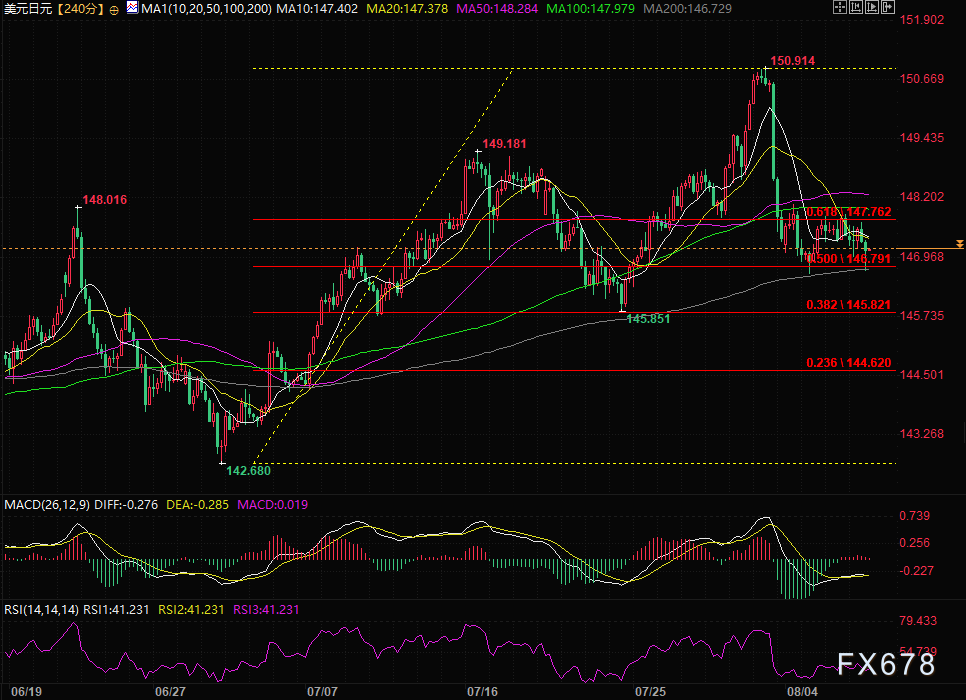
(USD/JPY 4-hour chart, source: Internet)
Beijing time: 17:15, the dollar against the yen is now 147.21/20
Please indicate the source: https://www.daoctech.com/fxschool/1686.html
Disclaimer: The content of this article does not represent the views of the Institute of Foreign Exchange. The content is for reference only and does not constitute investment advice. Investors operate accordingly at their own risk.