
Storm strikes in September! How a jobs report shakes global markets? The Federal Reserve's interest rate cut suspense is about to be revealed
The new week is about to start, and the eyes of global investors are focused on the US non-farm payrolls report for August to be released on September 5. This report will not only become a key indicator of the health of the US economy, but also directly determine whether the Federal Reserve will launch a new round of interest rate cuts at its September meeting. The current market is at a delicate moment: US stocks have just hit a record high, and interest rate cut expectations and political risks are surging deep in the market.
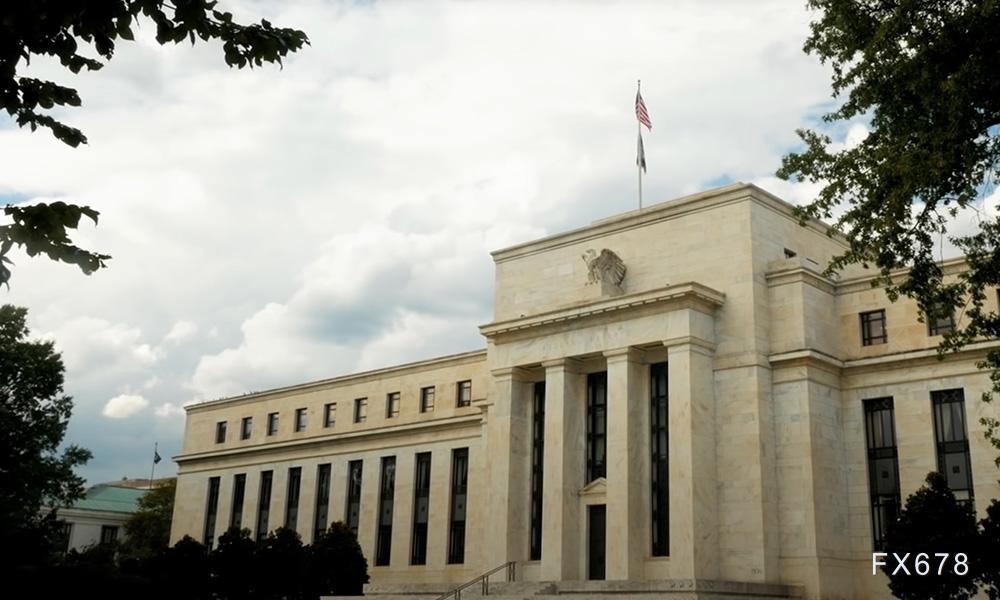
Employment data: a touchstone for interest rate cut expectations
Back in early August, the July non-farm payrolls data in the United States gave the market a surprise - but in a worrying way. With job creation of 73,000 people much lower than expected, and a sharp downward revision in the previous two months, the exceptionally weak report instantly ignited market expectations for the Federal Reserve to cut interest rates. Now, all institutions are looking at the August data. According to a Reuters poll, economists predicted that non-farm payrolls would increase by 75,000 in August, but given the unexpected downturn in July, the actual data may be more uncertain.
Alex Grassino, global chief economist at Manulife Investment Management, noted that breakdowns such as the unemployment rate and average hourly earnings - not just payrolls - would send important signals. Together, he expected the data to show that "the US labour market has cooled". Such signs of a broad-based slowdown could give the Fed enough reason to act.
Market games: a tug-of-war between economic concerns and policy expectations
Jack Janasiewicz, chief portfolio strategist at Fasheng Investment Management, points to the ambivalence of the market: a weak jobs report, while raising concerns about a slowdown, may also strengthen expectations of more aggressive rate cuts by the Federal Reserve. Under this logic, the benefits of lower interest rates may even offset the negative side of a slowing labor market, thus continuing to support stock market performance.
This complex psychology has been on vivid display in the recent movements of US stocks. Although the decline in artificial intelligence-related stocks dragged down the broader market on Friday, the S & P 500 index still rose 1.9% throughout August and has risen about 10% this year, just one step away from its all-time high. Investors appear to have shrugged off concerns that Trump's tariffs could lead to a recession and embraced technology stocks and other stocks that have benefited from the artificial intelligence boom.
Yet markets are entering the most dangerous period of the year. September has been the worst month for the S & P 500 over the past 35 years, with an average decline of 0.8 per cent, according to the Stock Trader's Almanac. In 18 of those 35 September months, the index has fallen - the only one in which it has fallen more than it has risen.
The Federal Reserve's Political Dilemma: Its Independence Is Challenged
In addition to the economic data, the Fed is also facing political pressure. President Trump recently announced that he would fire Governor Cook in an attempt to reshape the Fed's board of governors, a move that has sparked legal action. Cook filed a lawsuit on Thursday, arguing that the president has no right to remove her from office.
This is not the first time Mr. Trump has put pressure on the Fed. For months, he has lashed out at the Fed and Chairperson Jerome Powell for not cutting interest rates as he wishes. The controversy has raised concerns about the Fed's credibility and its independence, with the central bank's ability to conduct monetary policy despite political pressure becoming a new risk factor for investors to assess.
While Mr. Grassino of Manulife believes these risks may be properly priced in, he warns: "Many of the things that traditional market participants take for granted are now being called into question. As these issues emerge, the tail risks that may be seen are widening."
Interest rate cut probability: the market is ready for pricing
According to the London Stock Exchange Group, as of the end of August, Fed funds futures showed a high 87.6% probability that the Fed would cut rates by 25 basis points at its September 16-17 meeting. This means that any unexpectedly strong data could cause wild market volatility.
Drew Matus, chief market strategist at MetLife Investment Management, said: "There needs to be a very broad strength in the report to get the Fed to reconsider the idea of cutting rates." But he added that the likelihood of that happening was "pretty low". He even argued: "We may see a good report, but a good report is not going to stop the Fed from cutting rates."
Markets are pricing in a September cut as well as anticipating a cut in the coming months. Fed funds futures show they expect a cut of about 55 basis points by December, equivalent to just over two standard rate cuts.
The calm before the storm: Global markets wait with bated breath
As September approaches, the market appears to be in a period of calm before the storm. The jobs report, the first major economic data release in September, will be the first key signal to determine the direction of the market. Investors need to weigh economic fundamentals, the direction of Federal Reserve policy and political risks simultaneously, which undoubtedly adds to the complexity of decision-making.
In the context of a slowing global economy, ongoing trade tensions, and increasing political uncertainty, the significance of this jobs report goes beyond mere economic data. It will serve as a litmus test for market confidence, central bank independence, and economic resilience.
Please indicate the source: https://www.daoctech.com/fxschool/1737.html
Disclaimer: The content of this article does not represent the views of the Institute of Foreign Exchange. The content is for reference only and does not constitute investment advice. Investors operate accordingly at their own risk.